






What's Happening?
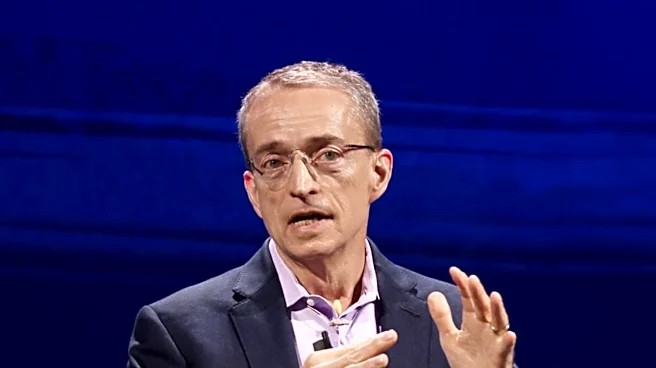
Former Intel CEO Pat Gelsinger has publicly supported a new memory technology called Z2RAM, developed by a semiconductor startup. Gelsinger, in an interview with The Register, stated that this technology could be the most significant innovation in memory in three
decades. He highlighted that the industry has seen no major advancements in memory beyond SRAM, DRAM, and Flash during this period. Z2RAM aims to combine the best features of these existing memory types, offering DRAM-like density, SRAM-like speed, and Flash-like manufacturing scalability. This endorsement suggests a potential shift in how memory is designed and utilized, particularly in advanced computing applications.
Why It's Important?
This endorsement from a prominent figure like former Intel CEO Pat Gelsinger carries significant weight within the semiconductor industry. If Z2RAM lives up to its potential, it could revolutionize memory technology, impacting various sectors, especially artificial intelligence (AI) and high-performance computing. The ability to combine high density, speed, and scalability in a single memory solution could lead to more efficient and powerful computing systems. This innovation could reduce bottlenecks in data processing, accelerate AI model training, and enable new applications that are currently limited by existing memory constraints. Companies heavily reliant on data processing and AI, including those in cloud computing, autonomous vehicles, and scientific research, stand to gain significantly from such a breakthrough. Conversely, manufacturers of traditional memory technologies might face increased competition and pressure to innovate.
What's Next?
The next steps for Z2RAM will likely involve further development, testing, and potential commercialization by the semiconductor startup. Given Gelsinger's endorsement, the technology may attract more investment and partnerships, accelerating its path to market. The industry will be closely watching for concrete performance benchmarks and manufacturing feasibility studies. If successful, Z2RAM could begin to be integrated into specialized computing systems, gradually expanding its presence. The broader impact will depend on its cost-effectiveness and ease of integration compared to established memory solutions. Regulatory bodies might also need to consider new standards or certifications for this novel memory type as it gains traction.
Beyond the Headlines
The potential emergence of Z2RAM highlights a deeper trend in the technology sector: the continuous pursuit of fundamental breakthroughs to overcome existing limitations. For decades, memory innovation has been incremental, but a technology like Z2RAM could represent a paradigm shift. This development could also spark a renewed focus on fundamental research in materials science and electrical engineering, as companies strive to develop the next generation of computing components. Ethically, the increased power and efficiency offered by such memory could raise questions about data privacy and the responsible use of advanced AI, as more complex and data-intensive applications become feasible. Culturally, it could further accelerate the digital transformation across industries, making advanced computing more accessible and powerful.