

What's Happening?
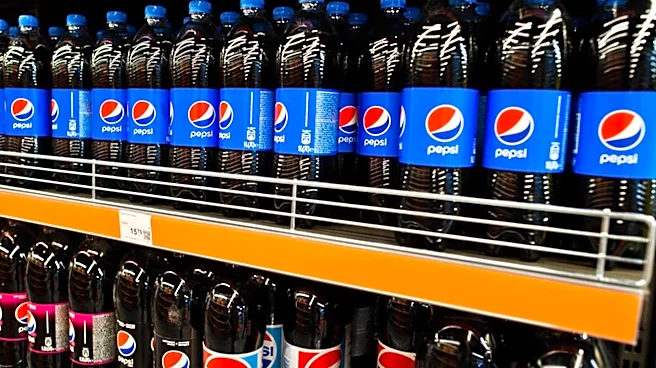
PepsiCo is facing scrutiny regarding the sustainability of its dividend payments following a challenging period marked by a reduced 2026 core earnings per share (EPS) growth outlook and the loss of KFC's U.S. drinks business to Coca-Cola. In its third-quarter
report on October 8, PepsiCo lowered its earnings growth projections. Subsequently, on October 15, KFC announced it would switch approximately 3,700 U.S. restaurants from Pepsi to Coca-Cola starting in January 2027. While PepsiCo offers a higher dividend yield of 4.3% compared to Procter & Gamble's 2.7%, its free cash flow has not kept pace with dividend growth. Dividends paid rose from $4.23 billion in fiscal 2016 to $7.64 billion in fiscal 2025, while free cash flow remained relatively flat, increasing from $7.62 billion to $7.67 billion over the same period. This has led to a high dividend payout ratio, reaching 110.1% of free cash flow in fiscal 2022, 100.6% in fiscal 2024, and 99.6% in fiscal 2025, indicating a risky level of payout.
Why It's Important?
The financial challenges faced by PepsiCo, including its reduced earnings outlook and the loss of a major client like KFC, raise significant concerns for investors, particularly those relying on dividend income. A high dividend payout ratio, where dividends exceed or nearly match free cash flow, can signal financial strain and potentially lead to future dividend cuts or slower growth. This situation contrasts with companies like Procter & Gamble, which maintains a more conservative payout ratio and a longer history of dividend increases. For PepsiCo, the need to improve its U.S. performance and generate stronger free cash flow is critical to maintaining investor confidence and ensuring the long-term viability of its dividend. The shift of KFC to Coca-Cola also highlights intense competition in the beverage sector, impacting market share and revenue streams for major players.
What's Next?
PepsiCo's CEO Ramon Laguarta has indicated that more structural cost cuts will be implemented in the coming months to improve the company's free cash flow. The effectiveness of these measures will be crucial in determining the future stability and growth of PepsiCo's dividend. Investors will closely monitor the company's financial performance, particularly its ability to generate sufficient free cash flow to cover its dividend payments. The transition of KFC's U.S. restaurants to Coca-Cola in January 2027 will also impact PepsiCo's beverage sales volume. The company's strategic initiatives to enhance innovation, brand building, and marketplace execution in North America will be key to reversing recent performance trends and strengthening its financial position.
Beyond the Headlines
PepsiCo's dividend sustainability concerns reflect a broader challenge for mature consumer goods companies navigating evolving market landscapes and intense competition. The reliance on dividends as a key component of investor returns places immense pressure on management to maintain consistent cash flow generation. This situation underscores the importance of robust financial health beyond just revenue growth, emphasizing free cash flow as a critical metric for long-term investor value. The competitive dynamics highlighted by the KFC contract switch also illustrate the constant battle for market share in the beverage industry, where even established brands must continuously innovate and secure distribution channels. This scenario could prompt a re-evaluation by investors of dividend-paying stocks, favoring those with stronger free cash flow coverage and more conservative payout ratios.