



What's Happening?
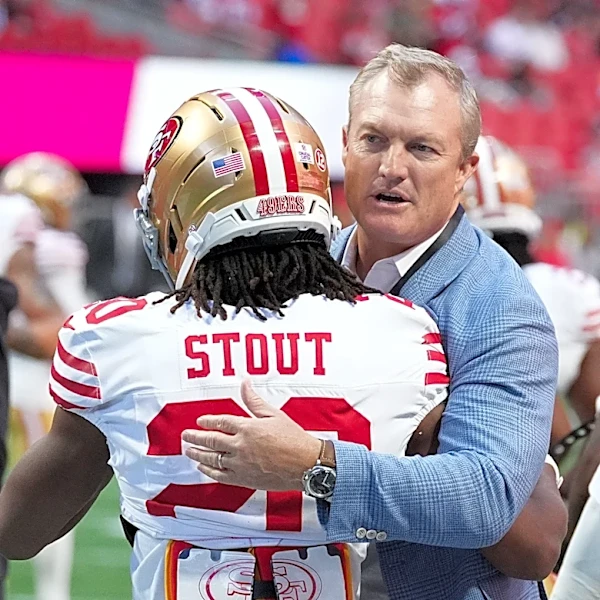
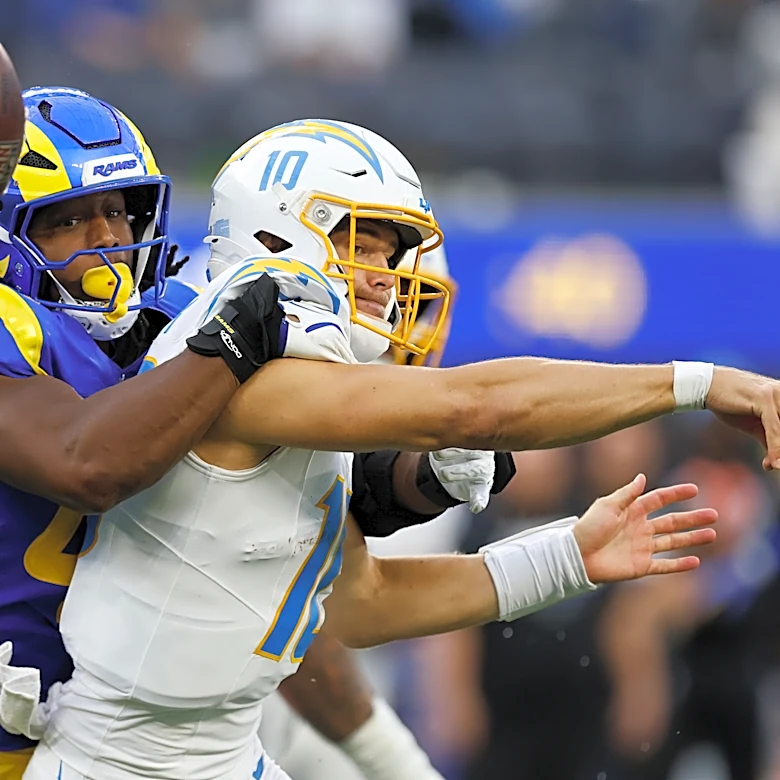
As of November 4, the Los Angeles Chargers have not initiated calls regarding potential trades, despite the NFL trade deadline approaching on November 10. The team is currently winless, holding an 0-7 record, which places significant pressure on General
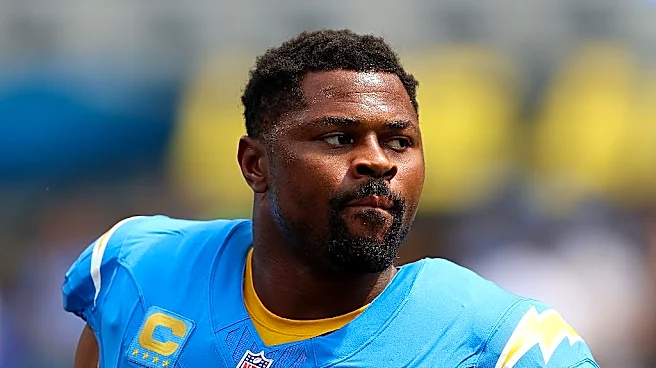
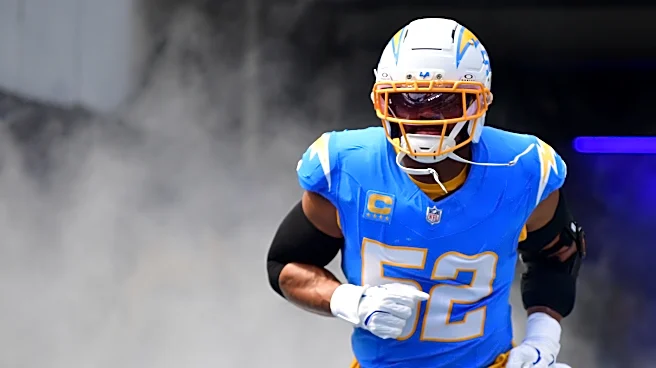
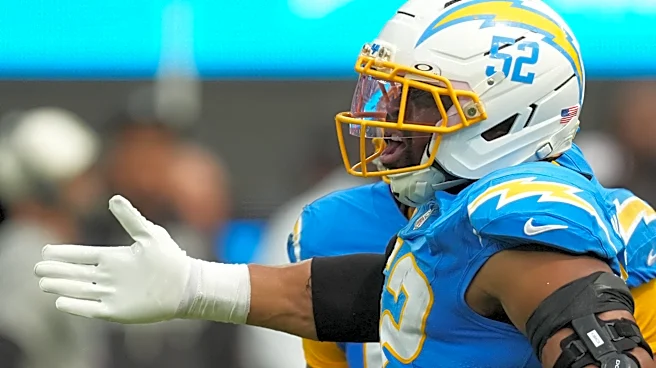
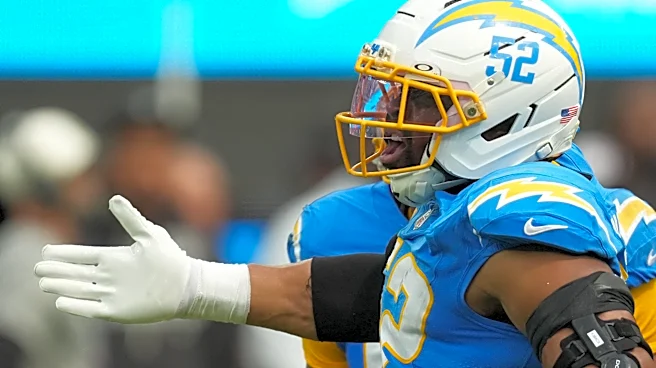
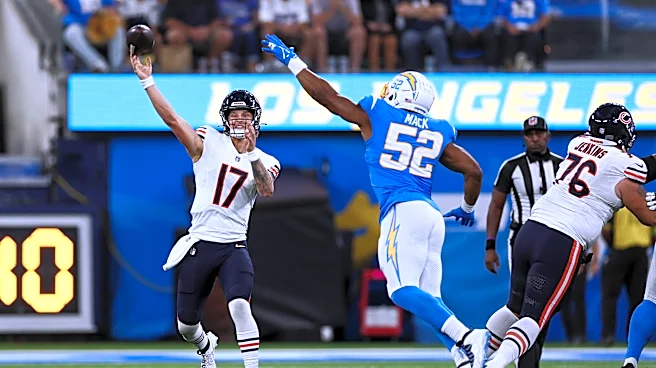
Manager Joe Hortiz. While the roster is not considered to require a complete rebuild, there is a growing sentiment that the Chargers should consider trading assets, particularly players who are likely to leave in free agency, to acquire additional draft capital. Hortiz has been credited for maximizing the value of mid- and late-round draft picks during his tenure. The team's current performance has led to speculation about potential trades for key players like Khalil Mack, Donte Jackson, and Dalvin Tomlinson, with suggested destinations including the Chicago Bears, Detroit Lions, and New Orleans Saints, respectively.
Why It's Important?
The Chargers' reluctance to engage in trade talks, despite their winless record, carries significant implications for the team's future. By not actively seeking trades, the organization risks losing valuable players in free agency without receiving any compensation, potentially hindering their ability to rebuild or improve the roster. Acquiring additional draft capital could provide the team with more opportunities to select promising talent and address critical weaknesses. The decision-making process at this trade deadline will reflect Hortiz's strategic vision for the franchise, whether he aims to protect his job, secure compensatory picks, or believes the current roster can still be competitive. The outcome of these decisions will directly impact the team's financial flexibility, draft resources, and overall competitiveness in the coming seasons, influencing fan perception and the long-term stability of the organization.
What's Next?
With the NFL trade deadline on November 10, the Chargers have a limited window to make any moves. If Hortiz decides to open trade discussions, potential deals could involve players like Khalil Mack, who, despite his age, remains a premier edge rusher and could fetch a fifth-round pick from a contender like the Chicago Bears. Donte Jackson, a cornerback, could be a target for the Detroit Lions in exchange for a sixth-round pick, especially given the Chargers' need for future investment in their cornerback room. Dalvin Tomlinson, a defensive tackle, might be moved to a team like the New Orleans Saints for a seventh-round pick, offering a cheap addition for a team looking to bolster its defensive line. The decisions made in the coming days will signal the Chargers' immediate and long-term strategy, either committing to the current roster or initiating a process of acquiring assets for future rebuilding efforts.
Beyond the Headlines
The Chargers' trade deadline strategy, or lack thereof, highlights a deeper organizational dilemma. The tension between maintaining a competitive roster and planning for future success is particularly acute for a winless team. The potential for a 'fire sale' is often met with fan disapproval, yet failing to capitalize on expiring contracts can be fiscally irresponsible. The suggested trades, while logical from a draft capital perspective, also involve moving veteran players who contribute to team leadership and on-field performance, even in a losing season. This situation underscores the complex balance NFL general managers must strike between short-term competitiveness and long-term sustainability. The outcome of this trade deadline will not only affect the Chargers' roster but also set a precedent for how the franchise approaches future player management and team construction.