




What's Happening?
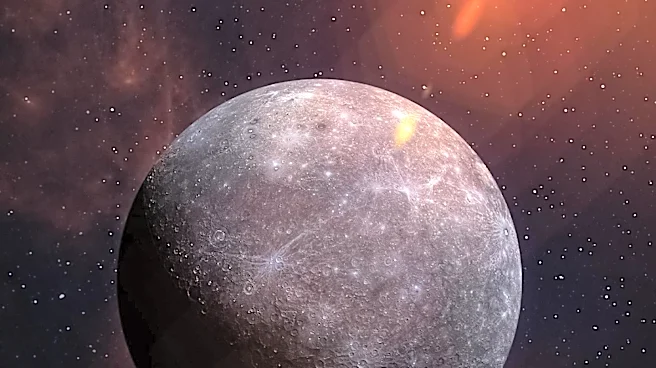
This week, Mercury reaches its greatest western elongation, providing an excellent opportunity for skywatchers to observe the planet. Mercury, the innermost planet of the solar system, is typically difficult to see due to its proximity to the sun. However,
during this period, it appears at its greatest apparent distance from the sun in the morning sky, making it more visible. Observers are advised to look towards the east-north-east before sunrise for the best chance to spot Mercury.
Why It's Important?
The event offers a rare chance for astronomy enthusiasts and the general public to observe Mercury, a planet that is often obscured by the sun's glare. Such celestial events can spark interest in astronomy and provide educational opportunities for those interested in learning more about the solar system. Observing Mercury can also enhance public appreciation for the dynamics of planetary motion and the unique characteristics of each planet.
What's Next?
As Mercury continues its orbit, it will eventually move closer to the sun's glare, becoming less visible. However, similar elongation events will occur in the future, offering more opportunities for observation. Astronomy organizations and educators may use this event to engage the public in discussions about planetary science and encourage participation in future skywatching activities.