



What's Happening?
Chapel Hill, North Carolina, is experiencing a significant shift in its rock climbing culture, moving from a historically 'secret' and renegade outdoor scene to a more commercialized indoor gym environment. Decades ago, local climbers like Jeff Coke,
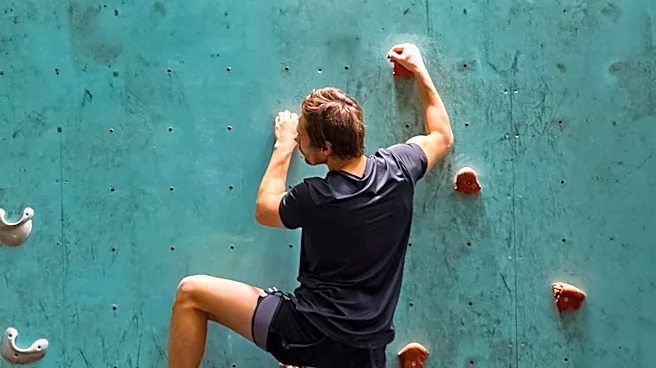
known as the 'Mayor of the Forest Theater,' established numerous climbing routes in the amphitheater and along Bolin Creek, often using homemade holds glued to concrete structures. These 'glue-ups,' though illegal, formed a vital part of the local climbing community, especially before the widespread availability of indoor gyms. The Forest Theater and 'The Pump Tunnel' were central to this early climbing scene, offering challenging routes and fostering a close-knit community where climbers shared equipment and techniques. The sport was characterized by its raw, less accessible nature, requiring ingenuity and a willingness to engage with urban structures. This historical context highlights a period when climbing was a more subversive activity, driven by passion and resourcefulness rather than commercial interests.
Why It's Important?
This transformation in Chapel Hill's climbing scene reflects a broader national trend in the sport, where indoor climbing gyms are becoming increasingly dominant. The rise of commercial gyms makes climbing more accessible to a wider demographic, including young people and women, contributing to its growth into a multi-billion-dollar industry. However, this commercialization also brings changes to the core culture of climbing. While increased accessibility and diversity are positive outcomes, some long-time climbers express concerns about a potential decline in safety awareness, as many new participants learn exclusively indoors without exposure to outdoor climbing's inherent risks and self-reliance. The shift also impacts the sense of community, moving from intimate, shared outdoor experiences to larger, more anonymous gym settings. This evolution raises questions about preserving the historical essence and unique challenges of outdoor climbing as the sport continues to expand and adapt to modern commercial models.
What's Next?
The trend of commercial climbing gyms is expected to continue its expansion, particularly in regions like the South and Midwest, which have been identified as leading markets for growth. As more indoor facilities open, the climbing community will likely become even larger and more diverse. This growth will necessitate ongoing discussions within the climbing community about how to balance accessibility and commercial success with the preservation of traditional climbing ethics, safety education, and the unique spirit of outdoor climbing. Local authorities, like those in Chapel Hill, may continue to encourage participation in sanctioned indoor facilities while addressing the legacy of informal outdoor climbing. The future will likely see a continued integration of indoor and outdoor climbing, with gyms potentially serving as gateways for new climbers to eventually explore outdoor environments, provided proper education and respect for the sport's history are maintained.
Beyond the Headlines
The evolution of climbing in Chapel Hill from a 'secret' activity to a commercialized sport touches upon deeper themes of urban space utilization, community formation, and the commodification of subcultures. The 'glue-ups' represent a form of urban intervention, where individuals creatively repurposed public infrastructure for recreational use, challenging conventional notions of public space. This practice, though illegal, fostered a strong sense of identity and camaraderie among early climbers. The shift to commercial gyms, while offering convenience and safety, also signifies a loss of this renegade spirit and the unique problem-solving skills developed in less structured environments. It highlights a broader societal trend where informal, often illicit, activities are eventually absorbed and regulated by commercial entities. This raises questions about authenticity, the role of risk in personal development, and how communities adapt when their foundational activities become mainstream. The nostalgia expressed by veteran climbers like Jeff Coke underscores the cultural value placed on these earlier, less structured forms of engagement.