









What's Happening?
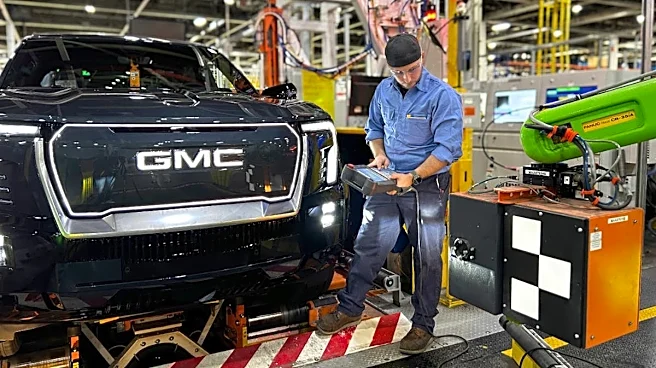
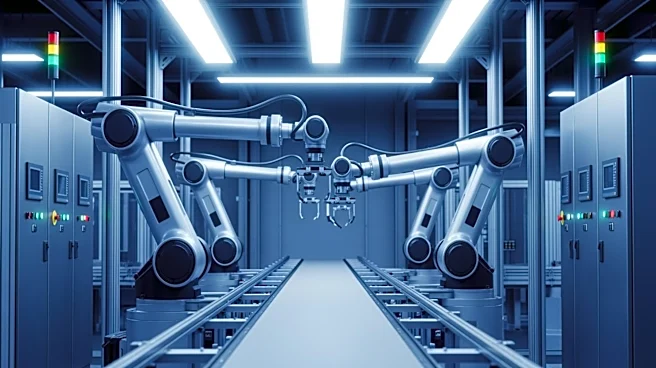
General Motors (GM) has replaced more than 1,000 workers with 50 collaborative robots, or 'cobots', at its flagship Detroit assembly plant, Factory Zero. This move comes amid a decline in demand for GM's electric vehicles (EVs) and a push to reduce costs.
The cobots are intended to work alongside remaining human employees to improve safety and ergonomics, according to GM. However, the United Auto Workers (UAW) union has expressed strong opposition, arguing that the robots are a cost-cutting measure that displaces human workers. UAW President Shawn Fain described the situation as a 'fight for humanity', emphasizing that workers are not benefiting from the increased productivity.
Why It's Important?
The introduction of cobots at GM's Detroit plant highlights the growing trend of automation in the automotive industry, which could have significant implications for labor markets. While GM claims that the cobots enhance safety and competitiveness, the union's grievances underscore the tension between technological advancement and job security. This development could influence future labor negotiations, as unions may seek stronger protections against job displacement due to automation. The broader impact on the U.S. economy includes potential shifts in employment patterns and the need for workforce retraining to adapt to new technologies.
What's Next?
The UAW is likely to pursue further action to protect its members' jobs, potentially influencing upcoming contract negotiations in 2028. The union may push for clauses that limit the use of automation or ensure job security for displaced workers. GM's strategy could also prompt other automakers to evaluate their own automation plans, potentially leading to industry-wide changes. Stakeholders, including policymakers and labor advocates, may need to address the balance between technological progress and employment stability.