



What's Happening?
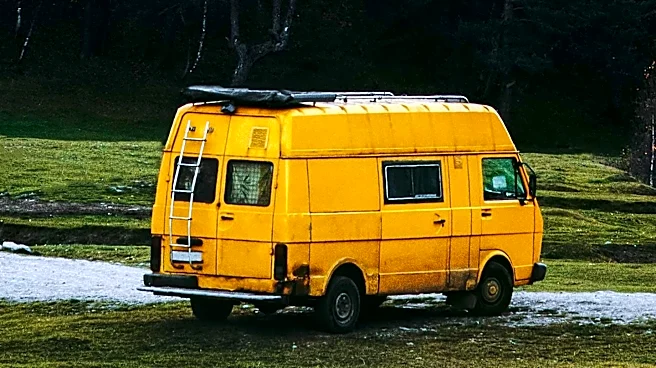
A full-time van dweller, known as Ev (@ev.winter) on YouTube, has completed a self-built, low-budget van home after a year and a half of construction, despite having no prior experience. The van is designed for full-time living and features a mostly white
interior, seven windows, and wood finishes to create a tiny home aesthetic. It includes a bathroom, a kitchen with appliances, and a large bed. A significant aspect of the build involved using reused materials, such as secondhand wood and paint for the ceiling and repurposed flooring from the creator's childhood home. The van is also equipped for extensive off-grid use, boasting 32 gallons of water storage, a 460-amp-hour battery, and nearly 1 kilowatt of solar power on the roof, enabling it to operate independently for at least four months. This project showcases how mobile living can offer a solution for individuals seeking to reduce housing costs and embrace a different lifestyle.
Why It's Important?
This development is important as it highlights a growing trend in the U.S. where individuals are seeking alternative, more affordable housing solutions amidst rising living costs. The van life movement, as demonstrated by Ev's project, offers a tangible example of how creative and resourceful approaches can lead to significant reductions in housing expenses and promote a minimalist lifestyle. The emphasis on off-grid capabilities, utilizing solar power and substantial water storage, also underscores a broader interest in self-sufficiency and sustainable living. This trend could influence housing markets by reducing demand for traditional homes in certain demographics and fostering a community around mobile living. Furthermore, the use of reused materials in construction promotes environmental consciousness and offers a model for sustainable building practices, potentially inspiring others to adopt similar methods in their own projects. The accessibility of such projects, even for those without prior experience, suggests a democratizing effect on homeownership and lifestyle choices.
What's Next?
The success of projects like Ev's van conversion is likely to inspire more individuals to explore van life and tiny home living as viable alternatives to conventional housing. This could lead to an increase in demand for resources related to van conversions, such as specialized parts, educational content, and community forums. We may see a rise in workshops and online courses dedicated to teaching DIY van building skills, further empowering individuals to undertake similar projects. Additionally, the growing popularity of off-grid living could spur innovation in portable power solutions, water conservation systems, and compact appliance design. Local governments and urban planners might also need to address the implications of increased van dwelling, such as establishing designated parking areas, developing regulations for mobile residences, and providing support services for this community. The continued sharing of experiences through platforms like YouTube will likely foster a stronger, more connected van life community.
Beyond the Headlines
Beyond the immediate practicalities of reduced housing costs and off-grid living, the rise of van life, exemplified by Ev's project, touches upon deeper societal shifts. It represents a re-evaluation of traditional notions of homeownership and stability, challenging the conventional American dream of a fixed, suburban house. This lifestyle often prioritizes experiences and freedom over material possessions, reflecting a broader cultural movement towards minimalism and experiential living. The self-sufficiency inherent in off-grid van living also speaks to a desire for greater autonomy and resilience, particularly in an era marked by economic uncertainties and environmental concerns. Ethically, it raises questions about land use, community integration, and the definition of 'belonging' when one's home is mobile. The community aspect, often fostered online, provides a sense of connection and shared purpose, highlighting how individuals are finding new ways to build social structures outside of traditional geographical boundaries. This movement could ultimately contribute to a more diverse and flexible understanding of what constitutes a home and a fulfilling life.