



What's Happening?
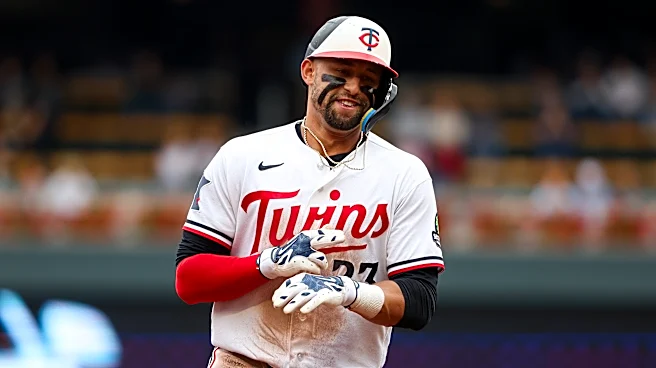
Houston Astros owner Jim Crane vetoed a trade that would have sent Trevor Larnach from the Minnesota Twins to the Astros at last year's trade deadline. This decision by Crane is highlighted as a factor in the Twins' subsequent moves regarding their outfield
roster. The Minnesota Twins recently non-tendered both Trevor Larnach and Matt Wallner, creating open spots in their outfield. Larnach's non-tender, while potentially surprising to some, was influenced by his ceiling entering his age-30 season and a recent wrist cleanup procedure. The Twins had reportedly considered trading Larnach again, but concerns about his health likely deterred potential suitors, leading to the non-tender as their best option.
Why It's Important?
Jim Crane's decision to veto the trade for Trevor Larnach had a direct impact on the Minnesota Twins' roster management and long-term strategy. By blocking the acquisition of Larnach, the Astros owner indirectly contributed to the Twins' current situation, where they are now relying on a youth movement in their outfield. This move affects both organizations: the Astros missed an opportunity to potentially acquire an outfielder, while the Twins were left to navigate their outfield logjam through non-tenders. The Twins' decision to non-tender Larnach and Wallner signifies a shift towards developing younger talent like Luke Keaschall, Walker Jenkins, Emmanuel Rodriguez, and Alan Roden, who now have a clearer path to playing time. This strategic pivot could reshape the Twins' competitive outlook in the coming seasons.
What's Next?
The Minnesota Twins' outfield will likely see significant changes with the departure of Trevor Larnach and Matt Wallner. Young prospects such as Luke Keaschall, Walker Jenkins, Emmanuel Rodriguez, and Alan Roden are now expected to compete for regular playing time. Keaschall, despite struggling in the outfield last season, is anticipated to focus on defense during the offseason and could secure a corner outfield spot. Jenkins and Rodriguez, who made strong debuts last season, may contend for the final outfield spot or serve as versatile players. The health of Byron Buxton, who had an injury-shortened 2026 season, will also be a critical factor in how the outfield alignment takes shape. The upcoming Spring Training will be crucial for these young players to demonstrate their readiness for major league roles.
Beyond the Headlines
The veto of the Trevor Larnach trade by Jim Crane underscores the significant influence team owners wield in player transactions and team strategy. Such decisions, while seemingly isolated, can have ripple effects across the league, impacting player movement, team development, and competitive balance. For the Twins, this event highlights the challenges of managing a prospect-rich system and the difficult choices involved in clearing roster space for emerging talent. It also brings to light the increasing scrutiny on player health and its impact on trade viability, as teams become more cautious about acquiring players with recent injury histories. This situation reflects a broader trend in MLB where teams are increasingly prioritizing financial flexibility and the development of homegrown talent over retaining established players who may not fit long-term plans.