



What's Happening?
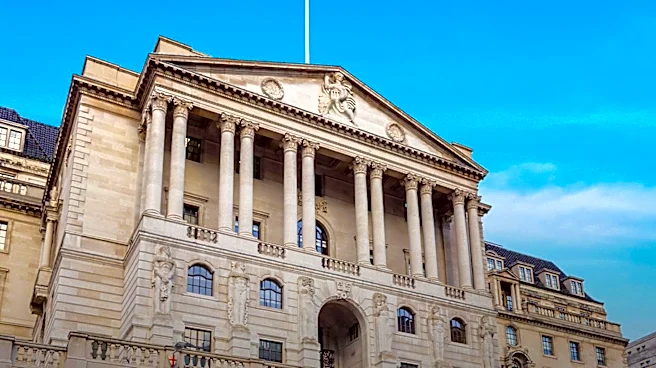
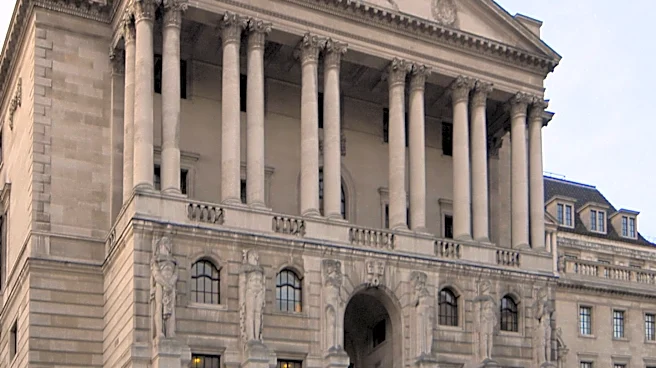
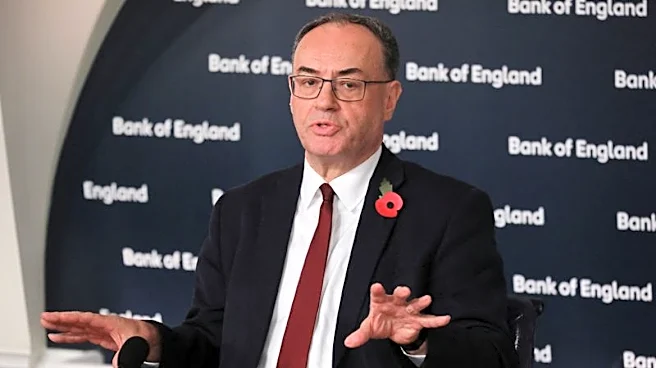
Andrew Bailey, Governor of the Bank of England, has issued a warning that banks are likely to transfer the costs of a new tax hike to their customers. This comes as Chancellor John Healey's Budget measure to double the banking corporation tax surcharge
from 3% to 6% is set to take effect in January. The government states this move aims to raise an additional £1.5 billion for cost-of-living support. However, Mr. Bailey suggests banks will seek to pass on these additional costs to "protect their earnings." This intervention is particularly significant as approximately one million homeowners are projected to see their monthly mortgage payments increase by £200 next year. Dr. Valentin Boboc, Chief Economist at the Institute of Economic Affairs (IEA), echoed these concerns, stating that businesses may pay taxes, but the public ultimately bears the cost, potentially worsening the cost-of-living crisis.
Why It's Important?
This development is important because it highlights a potential ripple effect of government fiscal policy on ordinary citizens. While the tax hike is intended to fund cost-of-living support, the Bank of England Governor's warning suggests it could inadvertently lead to higher borrowing costs for households and businesses, and lower returns for savers. This could exacerbate financial pressures on families already struggling with rising energy bills and mortgage rates. The banking sector's response to this tax increase will determine whether the burden is absorbed by the institutions or passed on, impacting the financial stability of millions. The situation underscores the complex interplay between government revenue generation, corporate profitability, and consumer financial well-being, with potential implications for economic growth and household budgets.
What's Next?
The banking corporation tax surcharge is scheduled to come into force in January, and banks will then decide how to manage the increased cost. Their success in passing on these costs will depend on market conditions and competition within the industry. Meanwhile, around one million homeowners are expected to face a significant jump in their monthly mortgage payments next year, with many more households projected to see increases over the next three years. Policymakers may consider further interest rate hikes if energy prices remain elevated, adding another layer of financial pressure. The government's stated goal of using the tax revenue for cost-of-living support will be closely watched to see if it effectively offsets the potential financial strain on consumers from increased banking costs.
Beyond the Headlines
The situation raises broader questions about the efficacy of targeted taxation on specific industries to fund social programs. While the intent is to have profitable sectors contribute more, the reality of a market economy often means these costs are eventually distributed across the customer base. This could lead to a perception of the government giving with one hand (cost-of-living support) while taking with the other (indirectly through higher banking costs). It also highlights the ongoing challenge of balancing fiscal responsibility with economic stability and consumer protection, especially during periods of high inflation and economic uncertainty. The debate over who ultimately bears the cost of corporate taxes is a recurring theme in economic policy, with significant implications for public trust and economic fairness.