


What's Happening?
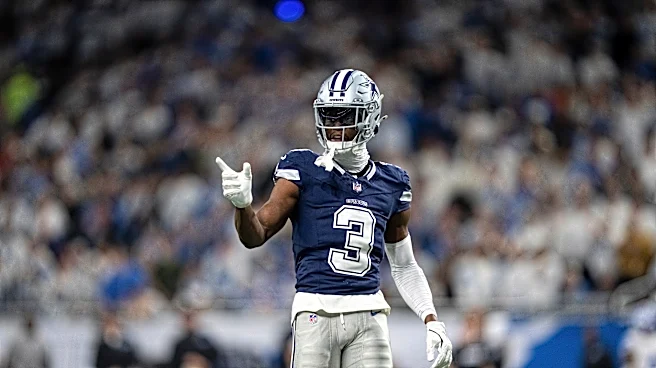
The Dallas Cowboys' defensive rebuild, centered on speed and flexibility, is placing significant pressure on rookie defensive back Caleb Downs, drafted 11th overall in the 2026 Draft. Eight games into the 2026 season, Dallas ranks last in total yards
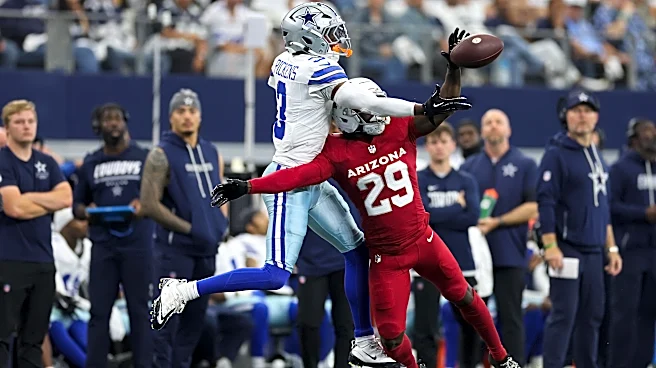
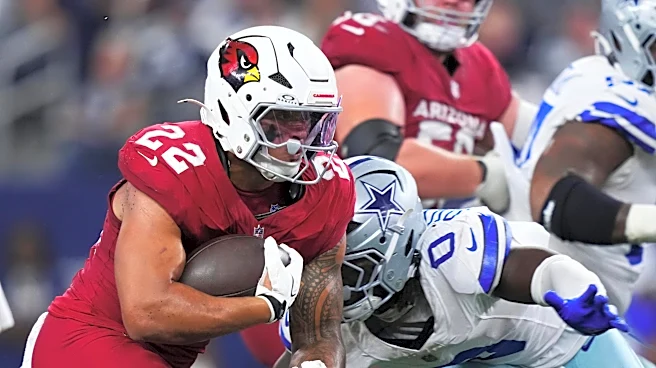
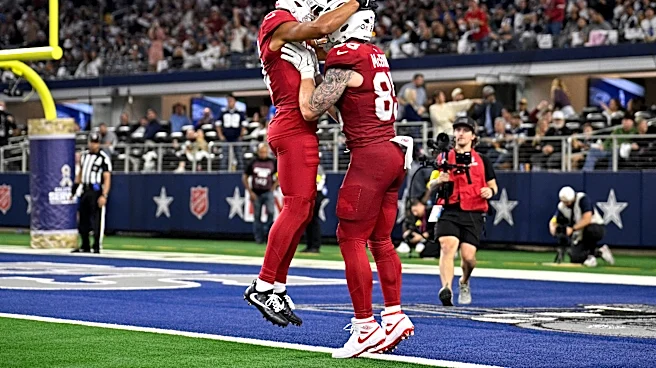
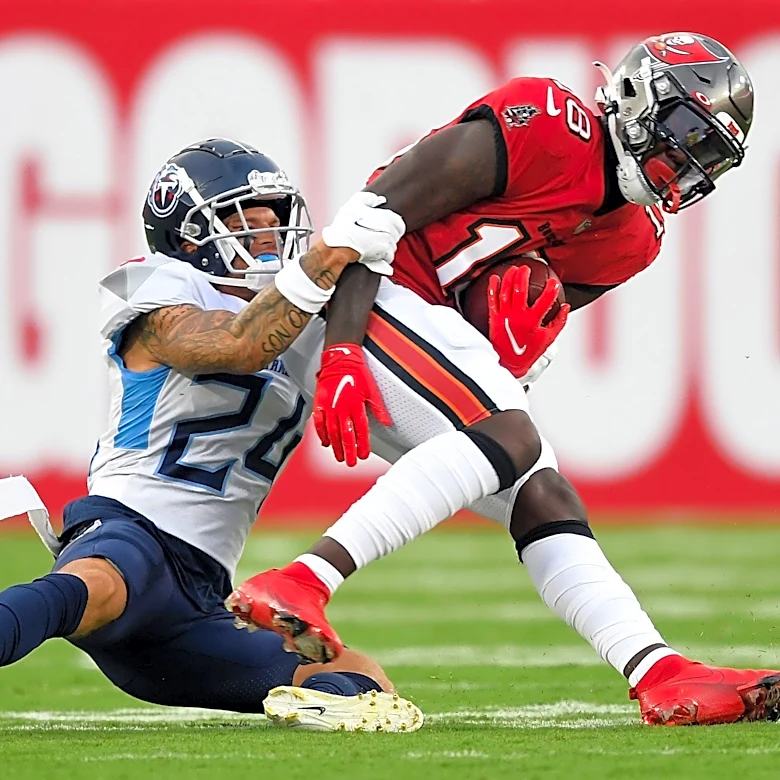
and rushing yards allowed. Downs has been a key player, starting all eight games and recording 52 tackles, 1.0 sack, two forced fumbles, and one pass breakup. However, his coverage numbers are struggling, with quarterbacks completing 20 of 24 passes against him for 230 yards and three touchdowns, resulting in a 146.2 passer rating. Downs recently entered concussion protocol after a game against the Arizona Cardinals, where he made costly errors, including a poor pursuit angle on a 63-yard touchdown run. The team's defensive issues extend beyond Downs, with the Cowboys allowing 385.4 yards per game and 152.8 rushing yards per game, both last in the NFL. The team has also struggled to force turnovers, with only three interceptions through eight games.
Why It's Important?
The performance of the Dallas Cowboys' defense, and specifically the role of Caleb Downs, carries significant implications for the team's season and future strategy. As a high first-round draft pick, Downs was expected to be a cornerstone of the defensive rebuild. His current struggles in coverage and the team's overall defensive woes could impact fan confidence, coaching staff evaluations, and future draft priorities. The constant shifting of Downs' role, from a hybrid nickel corner/safety to various positions due to safety injuries, highlights a broader organizational challenge in defining player roles and maximizing talent. If the Cowboys cannot stabilize their defense and provide Downs with a consistent role, it could hinder his development and the team's ability to compete, potentially affecting revenue streams from ticket sales and merchandise, and impacting the team's brand value within the highly competitive NFL market.
What's Next?
The immediate focus for the Dallas Cowboys will be on Downs' recovery from concussion protocol and his availability for upcoming games. Beyond that, the coaching staff faces critical decisions regarding his role and the overall defensive scheme. The team needs to identify a fixed role for Downs to allow him to develop consistency, particularly in coverage. This may involve adjusting the responsibilities of other defensive players or making strategic personnel changes. The Cowboys must also address the broader defensive failures, including improving communication and positioning in the secondary and shoring up the front seven to prevent large rushing gains. The team's performance in the coming weeks will be crucial in determining whether the defensive rebuild can be salvaged and if Downs can live up to his draft potential. The outcome will influence future coaching decisions and player acquisitions.
Beyond the Headlines
The situation with Caleb Downs and the Cowboys' defense reflects a common challenge in professional sports: the integration of high-draft-pick rookies into complex team systems. The pressure on young players to immediately perform at an elite level, especially in critical defensive roles, can be immense. The Cowboys' approach of frequently changing Downs' position, while intended to leverage his versatility, may inadvertently be hindering his ability to master a single role. This highlights a broader organizational philosophy debate: whether to prioritize immediate tactical flexibility or long-term player development through specialization. The team's struggles also underscore the difficulty of a rapid defensive rebuild, even with significant draft capital and coaching changes. The long-term implications could include a re-evaluation of draft strategies, coaching methodologies, and player development programs across the league, as teams seek to optimize the integration of new talent.