







What's Happening?
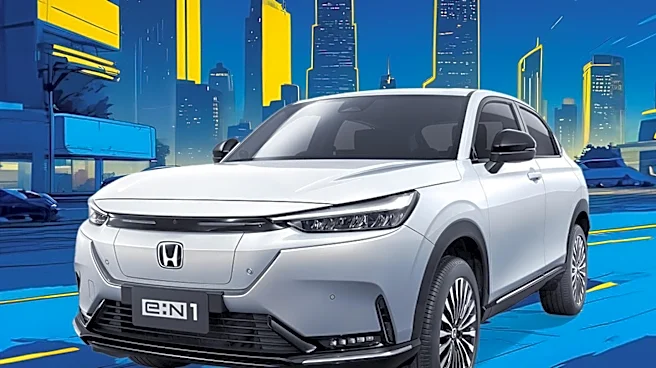
Honda Motor Co., Ltd. is set to globally debut its new battery-powered vehicle, the Honda Alpha, on December 2, 2026. This electric SUV, which evolved from a concept prototype shown at the 2025 Japan Mobility Show, will be exclusively produced in India.
The Alpha will also feature Honda's redesigned 'H' logo, specifically for its zero-emission models. This launch signifies a strategic shift towards electrification, following a period where Honda overhauled its North American portfolio due to cooling consumer demand and rising production costs. The company had previously canceled its Prologue EV for the American market, opting instead for an accelerated hybrid timeline to fill immediate showroom gaps. While the Alpha is a compact utility vehicle designed for global markets, a recent patent filing suggests Honda may be preparing a localized variant for the U.S., with camouflaged test mules already spotted in California.
Why It's Important?
This development is significant for the U.S. automotive market as it indicates Honda's evolving strategy for electric vehicles. The initial cancellation of the Prologue and the pivot to hybrids in North America highlighted challenges in EV adoption and production costs. However, the potential introduction of an Alpha-like EV in the U.S. suggests Honda is still committed to the electric future, albeit with a more cautious and market-responsive approach. This could lead to increased competition in the electric SUV segment, offering more choices for American consumers. The strategic decision to leverage global platforms like the Alpha's underlying architecture for the U.S. market could also impact manufacturing and supply chain dynamics, potentially leading to more efficient production and competitive pricing for future Honda EVs in the U.S.
What's Next?
The global debut of the Honda Alpha on December 2, 2026, will provide more details about its specifications and market positioning. For the U.S. market, the key next step will be Honda's official announcement regarding a localized variant of the Alpha or a mechanically similar electric crossover. The ongoing federalization testing of camouflaged electric vehicles in California strongly hints at an imminent reveal for the American market. As battery costs stabilize, Honda is expected to fully leverage the Alpha's architecture to launch a competitive electric crossover in the U.S. This will likely involve further announcements on production plans, pricing, and availability, which will be closely watched by consumers, competitors, and dealerships.
Beyond the Headlines
The introduction of the Honda Alpha and its potential U.S. variant reflects a broader industry trend of automakers adapting their electrification strategies to regional market demands and economic realities. Honda's initial pullback from a full EV push in North America, followed by the potential re-entry with a globally developed platform, illustrates the complexities of the EV transition. This approach allows Honda to benefit from economies of scale by developing a global platform while tailoring specific models to local preferences and regulations. It also highlights the ongoing debate within the automotive industry about the optimal pace and method of transitioning to electric vehicles, balancing consumer demand, infrastructure readiness, and profitability. The success of such a strategy could influence other manufacturers in how they approach their global and regional EV rollouts.