







What's Happening?
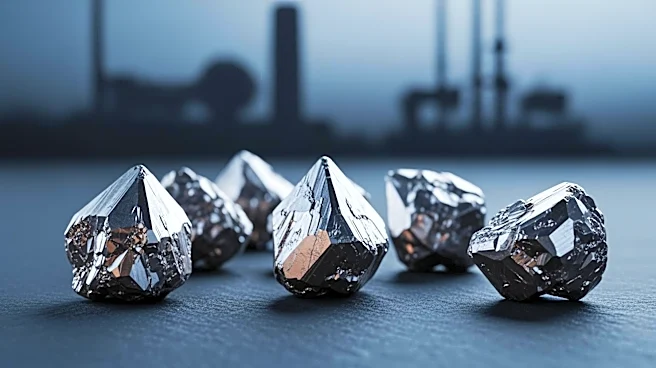
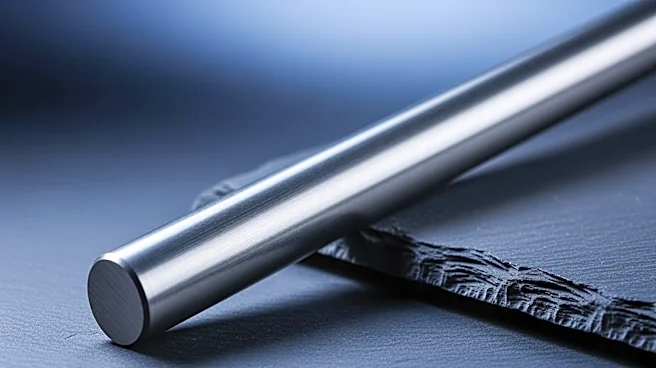
The demand for tungsten in the United States is on the rise, driven by its critical applications in defense and industrial sectors. Tungsten, known for its high hardness and melting point, is essential in various industries, including aerospace, automotive,
and electronics. The mineral is used in cutting tools, military projectiles, and components for high-stress environments. The U.S. currently relies heavily on imports, as it has no active tungsten mines. This dependency has been exacerbated by China's recent export restrictions on tungsten, as China accounts for about 80% of the global supply. In response, the U.S. has banned tungsten imports from China, Russia, Iran, and North Korea for military applications, effective January 1, 2027. This has led to increased imports from alternative sources, such as Rwanda, which now supplies 20% of the U.S. tungsten demand.
Why It's Important?
The growing demand for tungsten in the U.S. highlights the strategic importance of securing a stable supply of critical minerals. Tungsten's role in defense applications, such as armor-piercing ammunition and aerospace components, makes it vital for national security. The U.S. ban on imports from certain countries underscores the geopolitical tensions surrounding mineral resources. As the U.S. seeks to diversify its supply chain, countries like Rwanda are becoming key partners. This shift not only impacts global trade dynamics but also emphasizes the need for the U.S. to develop domestic sources or alternative suppliers to mitigate supply chain risks.
What's Next?
The U.S. is likely to continue seeking new partnerships and investments in countries with tungsten resources to ensure a steady supply. This may involve increased collaboration with African nations and investments in mining operations. Additionally, the U.S. might explore domestic mining opportunities to reduce reliance on foreign sources. The upcoming ban on imports from certain countries could also prompt technological innovations to recycle tungsten or develop substitutes. Stakeholders in the defense and industrial sectors will need to adapt to these changes, potentially influencing policy decisions and international relations.