







What's Happening?
A recent study published in the Journal of Neurology Neurosurgery & Psychiatry indicates that adherence to the MIND diet may slow brain aging by approximately 2.5 years. The research, conducted on 1647 middle-aged and older adults from the Framingham
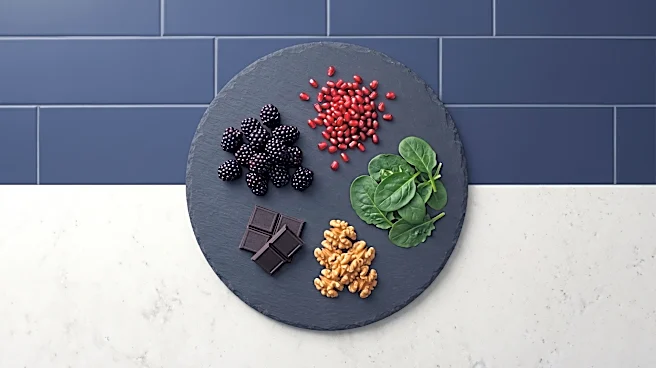
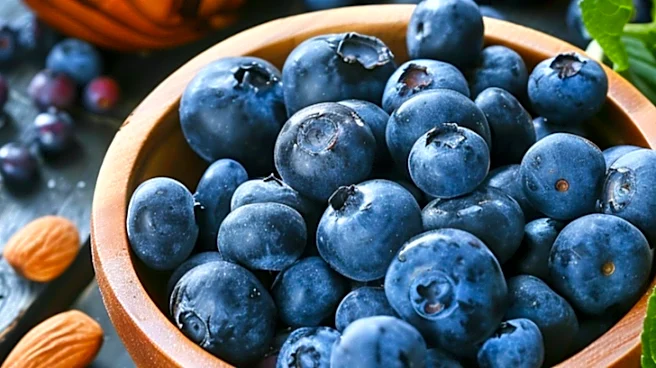
Heart Study Offspring cohort, found that greater adherence to the MIND diet was associated with less brain tissue loss over time, particularly in grey matter. Grey matter is crucial for memory, learning, decision-making, and information processing. The diet was also linked to less enlargement of the brain's ventricles, which are fluid-filled spaces that typically expand as brain tissue shrinks. The MIND diet, an acronym for Mediterranean-DASH Intervention for Neurodegenerative Delay, emphasizes green leafy vegetables, other vegetables, berries, nuts, whole grains, fish, olive oil, and poultry, while recommending limits on butter/margarine, cheese, red meat, pastries/sweets, and fried fast foods. The study observed these changes over an average follow-up period of 12 years, with participants undergoing regular health evaluations and MRI brain scans.
Why It's Important?
This study provides significant insights into the potential of dietary interventions to impact brain health and combat age-related cognitive decline in the U.S. population. With an aging demographic, neurodegenerative diseases like Alzheimer's and Parkinson's pose a growing public health challenge. The finding that the MIND diet can slow brain aging by 2.5 years offers a tangible, accessible, and non-pharmacological strategy for individuals to potentially mitigate these risks. This could lead to broader public health campaigns promoting the MIND diet, influencing dietary guidelines, and potentially reducing healthcare costs associated with cognitive decline. The emphasis on specific food groups like berries and poultry, and the caution against sweets and fried foods, provides clear actionable advice for individuals and healthcare providers, fostering a proactive approach to brain health.
What's Next?
While this observational study cannot establish direct causation, its findings reinforce the potential of the MIND diet as a brain-healthy dietary pattern. Future research will likely focus on interventional studies to confirm the causal link between MIND diet adherence and slower brain aging. Researchers may also explore the specific mechanisms through which certain foods, like berries and poultry, contribute to brain health, and how unfavorable foods, such as sweets and fried fast foods, accelerate decline. The study's suggestion that combining the MIND diet with other healthy lifestyle habits, such as physical activity, could further reduce the risk of neurodegenerative disease, warrants further investigation. Public health initiatives may begin to integrate these findings into recommendations for healthy aging, potentially leading to a shift in dietary habits across the U.S.
Beyond the Headlines
The implications of this research extend beyond individual dietary choices, touching upon broader societal and economic aspects. If dietary interventions can significantly delay brain aging, there could be a profound impact on the productivity and quality of life for older adults, potentially extending their active years and reducing the need for long-term care. This could also influence agricultural and food industries, driving demand for MIND diet-friendly foods and potentially leading to changes in food production and marketing. Furthermore, the study highlights the complex interplay between diet, lifestyle, and brain health, underscoring the need for a holistic approach to well-being. The unexpected findings regarding whole grains and cheese also suggest that our understanding of nutrition and its impact on the brain is still evolving, prompting further scientific inquiry into the nuanced effects of various food components.