





What's Happening?
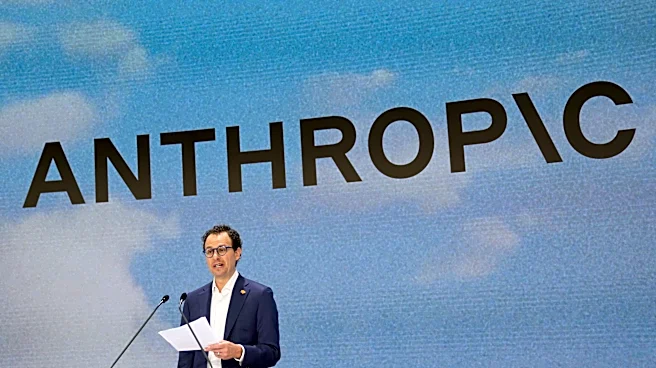
Anthropic's recent Initial Public Offering (IPO) has led to a significant increase in wealth for its employees, with 598 non-founder employees now possessing at least $100 million each. This surge in wealth means Anthropic has more centimillionaires than
the entire populations of London, Paris, or Los Angeles, with only San Francisco and New York City having more. The company's collective employee and co-founder wealth is estimated at approximately $350 billion, surpassing the total wealth of the bottom one-third of Americans. This financial outcome has sparked discussions about wealth concentration and economic inequality, particularly within the context of the rapidly expanding artificial intelligence (AI) industry. Critics, including former Chicago Mayor Rahm Emanuel and Oxfam America's Hana Ivanhoe, argue that such wealth accumulation at the top exacerbates existing economic divides and could undermine future economic stability if not addressed through policy changes.
Why It's Important?
The substantial wealth generated by Anthropic's IPO highlights a growing concern regarding wealth distribution in the burgeoning AI sector. This event serves as a stark example of how technological advancements, while creating immense prosperity, can also deepen economic inequality if the benefits are concentrated among a small group. The situation raises critical questions about the future of the U.S. economy and society, particularly as AI continues to develop at a rapid pace. If wealth generated by AI disproportionately benefits a few, it could lead to social unrest, reduced economic mobility for the majority, and increased pressure on public services. The calls for tax code changes by figures like Rahm Emanuel underscore the political and societal implications of this trend, suggesting that policymakers may face increasing pressure to address wealth concentration to ensure a more equitable distribution of AI-driven prosperity.
What's Next?
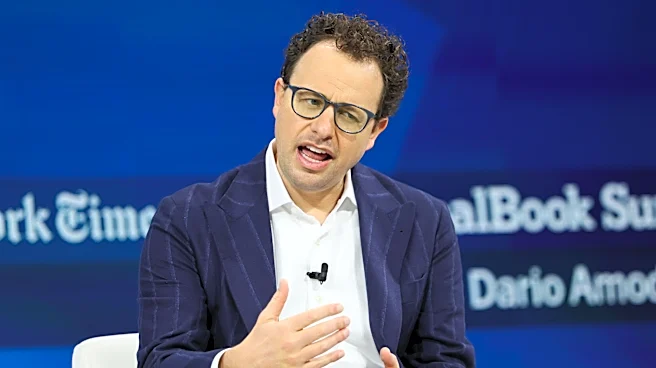
The significant wealth generated by Anthropic's IPO is likely to intensify the ongoing debate about wealth inequality and the role of the AI industry in shaping economic landscapes. Policymakers may face increased pressure to consider new tax policies or regulatory frameworks aimed at redistributing wealth or preventing excessive concentration. The philanthropic commitment by Anthropic CEO Dario Amodei and his co-founders to donate 80% of their equity could set a precedent or inspire similar actions within the tech industry, though critics argue that such voluntary measures may not be sufficient to address systemic issues. Future IPOs in the AI sector will likely be scrutinized more closely for their impact on wealth distribution, potentially leading to greater public and political discourse on how to ensure the benefits of technological progress are shared more broadly across society.
Beyond the Headlines
The wealth concentration observed with Anthropic's IPO extends beyond mere financial figures, touching upon deeper ethical and societal implications. The rapid accumulation of wealth by a select few in the AI sector raises questions about the long-term societal impact of AI development. If the economic benefits of AI are not broadly distributed, it could exacerbate existing social divisions and create new forms of inequality, potentially leading to a less cohesive society. Furthermore, the concerns voiced by Anthropic CEO Dario Amodei himself about AI-driven wealth concentration breaking society underscore a growing awareness within the industry of its broader responsibilities. This situation highlights the tension between rapid technological advancement and the need for equitable societal development, suggesting that the AI boom will continue to challenge traditional economic models and ethical frameworks.