






What's Happening?
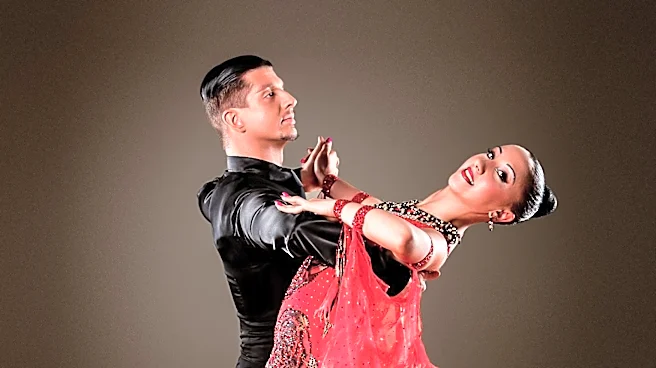
Olympic skater Amber Glenn, a contestant on 'Dancing With the Stars,' recently made history by becoming the first woman to lead a male partner in a dance on the show. During 'Disney Night,' Glenn and her professional dance partner, Pasha Pashkov, performed
a quickstep to 'A Star is Born' from 'Hercules.' Judge Carrie Ann Inaba highlighted this as a significant moment for the show. Glenn expressed that she was inspired by the training arc in 'Hercules' and wanted to embody the hero. The performance also featured Glenn showcasing her biceps, a physical attribute she previously felt insecure about but has now embraced as a strength. Pashkov shared a video on social media of the pair making 'bicep hearts,' which garnered significant attention online.
Why It's Important?
This event is important as it challenges traditional gender roles within ballroom dancing, a field often characterized by the male lead. Glenn's decision to take the lead, and the show's platforming of this choice, sends a powerful message about female empowerment and breaking stereotypes in performance arts. Her openness about overcoming past insecurities regarding her muscular physique resonates with many, promoting body positivity and the idea that strength can be graceful. This moment could inspire other female dancers and athletes to embrace their physical capabilities and leadership roles, potentially influencing future choreography and dynamics in competitive dance. It also highlights the evolving nature of reality television to reflect and celebrate diverse forms of expression and leadership.
What's Next?
Amber Glenn and Pasha Pashkov are among the seven remaining pairs on 'Dancing With the Stars.' The competition is ongoing, with the season finale scheduled for November 24. Viewers can anticipate more performances from Glenn and Pashkov, and it remains to be seen how this historic lead will influence their future routines and the judges' scoring. The attention generated by Glenn's leadership and body positivity could also lead to increased discussions about gender roles and representation in sports and entertainment. Her journey on the show will continue to be watched by fans and commentators, potentially setting new precedents for female athletes in mainstream media.
Beyond the Headlines
Beyond the immediate competition, Glenn's narrative touches on deeper societal issues concerning body image and gender expectations for female athletes. Her past insecurity about her muscles, stemming from a perception that they made her 'too masculine' for skating, reflects the pressures many female athletes face to conform to certain aesthetic ideals. Her journey to accepting and celebrating her strength as a 'superpower' offers a compelling counter-narrative. This shift in perspective, amplified by a popular show like 'Dancing With the Stars,' could contribute to a broader cultural re-evaluation of female athleticism, encouraging young girls and women to value strength and capability over conventional notions of grace or femininity. It also underscores the role of media platforms in shaping public perceptions and promoting inclusive ideals.