







What's Happening?
The Fresno Gardening Green blog has released guidance for rose care during November, emphasizing adjustments for changing weather and daylight. Gardeners are advised to adhere to a new watering schedule, limiting irrigation to once a week and watering in cycles
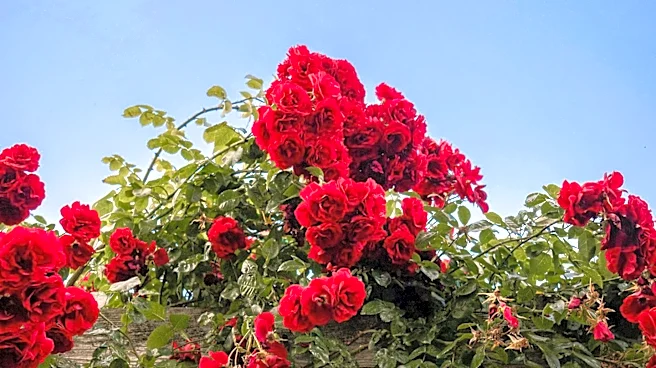
to ensure proper absorption. The blog also highlights the importance of watering the base of the plants to prevent fungal diseases. Fertilization should occur on November 1st and 15th, after which it should cease until early spring. Additionally, the article introduces several new rose varieties from Star Roses that will be available for spring sale, including 'Be Good' (a bright yellow grandiflora), 'Brick House Yellow' (a disease-resistant yellow rose), 'Lemon Frost' (a pollinator-attracting climber), and 'Triple Knock Out' (a repeating rose with disease resistance and fragrance). Gardeners are encouraged to deadhead spent roses to promote new growth, distinguishing this from winter pruning.
Why It's Important?
This information is crucial for gardeners in the Central Valley, particularly those cultivating roses, as it provides timely and specific instructions for maintaining plant health during a transitional weather period. Adhering to the recommended watering and fertilization schedules can prevent common issues like fungal diseases and ensure robust blooms for the fall and early winter seasons. The introduction of new rose varieties offers economic implications for nurseries and horticultural businesses, as these new offerings can drive sales and interest among gardening enthusiasts. For consumers, these new options provide opportunities to enhance their gardens with improved disease resistance, unique colors, and pollinator-attracting features, potentially leading to more sustainable and vibrant landscapes. The guidance also helps conserve water by promoting efficient watering practices, which is vital in regions prone to drought concerns.
What's Next?
Gardeners in the Central Valley should implement the recommended watering schedule and fertilization practices for November. They can anticipate the availability of the newly introduced rose varieties from Star Roses, such as 'Be Good,' 'Brick House Yellow,' 'Lemon Frost,' and 'Triple Knock Out,' for purchase in the upcoming winter for spring planting. Continued monitoring for pests and fungal diseases will be necessary, with appropriate treatments applied as needed. The blog advises against pruning roses during this period, reserving it for late winter or early spring. The success of these new rose varieties will likely influence future breeding and marketing efforts by horticultural companies, potentially leading to more innovations in disease resistance and aesthetic appeal in roses.
Beyond the Headlines
The detailed rose care instructions reflect a broader trend in horticulture towards sustainable gardening practices, emphasizing water conservation and disease prevention through proper technique rather than excessive chemical use. The introduction of new rose varieties with enhanced disease resistance, such as 'Brick House Yellow' and 'Triple Knock Out,' signifies a continuous effort by breeders to develop more resilient plants that require less maintenance and fewer interventions. This not only benefits individual gardeners by reducing effort and cost but also contributes to environmental health by minimizing pesticide and fungicide use. The focus on pollinator-attracting varieties like 'Lemon Frost' also highlights a growing ecological awareness within the gardening community, promoting biodiversity and supporting local ecosystems. This shift underscores a cultural appreciation for gardening that balances aesthetic appeal with environmental responsibility.