








What's Happening?
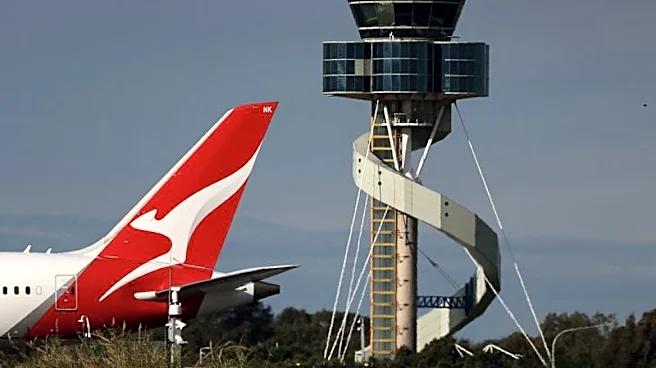
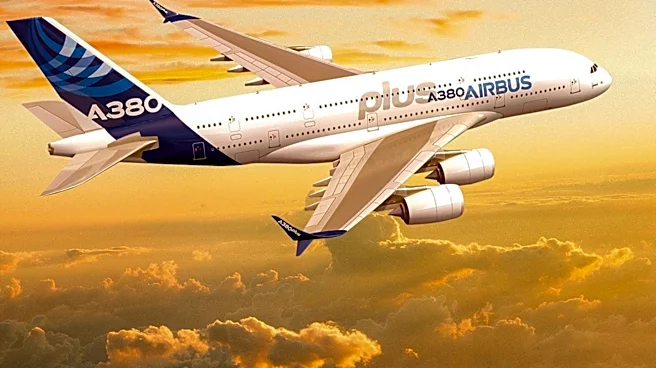
The Airbus A380 superjumbo, once envisioned to revolutionize commercial aviation, is facing an accelerated decline as airlines increasingly retire the aircraft earlier than planned. Qantas, Australia's flag carrier, has decided to retire its 10 A380s
by mid-2028, four years ahead of schedule. This decision is driven by the rising costs and complexity of maintaining the aircraft, exacerbated by the end of its production in 2021 and subsequent supply-chain constraints making parts harder to obtain. Other airlines, including Air France, China Southern, Malaysia Airlines, and Thai Airways, have already phased out their A380 fleets, while Lufthansa, Korean Air, Singapore Airlines, and Qatar Airways have reduced theirs. The COVID-19 pandemic significantly hastened this trend, grounding most of the global fleet and leading to extended storage periods for many A380s. Despite 196 of the 251 delivered A380s remaining in service, primarily with Emirates, the aircraft's operational challenges, such as high fuel consumption and the necessity to fill a large number of seats, have made it less attractive compared to newer, more fuel-efficient twin-engine models like the Boeing 787 and Airbus A350.
Why It's Important?
The accelerated retirement of the Airbus A380 signifies a major shift in the commercial aviation industry, moving away from very large aircraft towards more efficient, smaller models. This trend impacts aircraft manufacturers, airlines, and the broader travel sector. For manufacturers like Airbus, it underscores the challenges of developing and sustaining niche aircraft types that require specific market conditions to thrive. For airlines, the decision to retire A380s reflects a strategic pivot towards cost-efficiency and operational flexibility, particularly in response to volatile fuel prices and evolving passenger demand patterns. The high maintenance costs and fuel consumption of the four-engine A380 make it less viable in an environment where profitability is paramount. This shift also affects airports, which had invested in infrastructure to accommodate the superjumbo, potentially leading to underutilized facilities. The move away from the A380 highlights the industry's continuous adaptation to economic pressures and technological advancements, prioritizing operational savings and environmental considerations.
What's Next?
The trend of A380 retirements is expected to continue, with more airlines likely to follow suit as their existing fleets age and maintenance costs escalate. While Emirates remains a significant operator and is investing in a retrofit program for its A380s, the overall global fleet of the superjumbo will likely shrink further. This will lead to increased demand for spare parts for the remaining operational aircraft, potentially driving up costs for those still flying the model. The focus for airlines will increasingly be on optimizing their fleets with newer, more fuel-efficient aircraft, which could spur further innovation in aircraft design and propulsion systems. The aviation industry will continue to monitor fuel prices and passenger load factors, which will be critical determinants for the operational viability of any large aircraft. The long-term implications include a potential reduction in direct, high-capacity routes, and a greater emphasis on hub-and-spoke models utilizing smaller, more frequent flights.
Beyond the Headlines
The story of the Airbus A380's decline extends beyond mere economics and operational efficiency; it reflects a broader evolution in global travel patterns and environmental consciousness. The initial vision for the A380 was based on the premise of increasing demand for hub-to-hub travel, where large aircraft would transport many passengers between major international airports. However, the rise of point-to-point travel, facilitated by more efficient twin-engine jets, diminished the A380's competitive edge. Furthermore, the environmental impact of large, four-engine aircraft with higher fuel consumption is becoming an increasingly significant factor for airlines facing pressure to reduce carbon emissions. The A380's fate serves as a cautionary tale for ambitious engineering projects that may not align with long-term market dynamics and sustainability goals. It also highlights the delicate balance between innovation, economic viability, and environmental responsibility in the highly competitive aviation industry.