







What's Happening?
Dole Food Company has announced its decision to discontinue coffee farming on Oahu, leading to the layoff of nine employees on November 30. The company is actively seeking to sell its 154-acre Waialua Estate farm, which has been listed without an asking
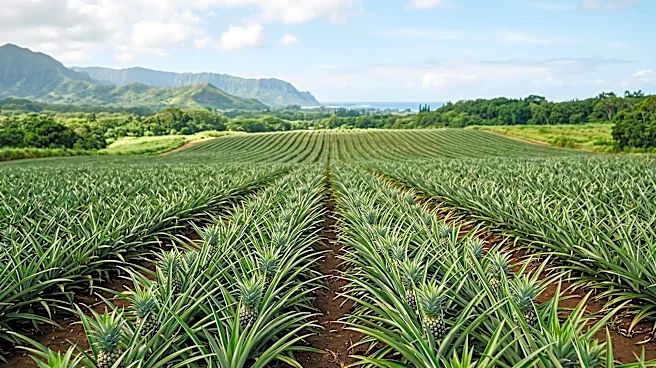
price for over a year. This move follows the sale of a nearby 151-acre cacao orchard in July and signifies a strategic shift to concentrate on its core business of pineapple farming. Dan Nellis, Dole’s general manager for Hawaii, confirmed that the company will no longer operate the coffee business, instead focusing on its approximately 2,700 acres of pineapple cultivation above Oahu's North Shore. Dole had established coffee and cacao operations in 1996 as part of agricultural diversification efforts after closing Waialua Sugar Co. that same year. The company's historical presence in Hawaii dates back to 1901 with the establishment of Hawaiian Pineapple Co. by James Dole.
Why It's Important?
This decision by Dole Food Company reflects a broader trend of agricultural land use changes and corporate strategic realignments in Hawaii. The cessation of coffee farming and the sale of agricultural land highlight the economic pressures and evolving priorities faced by large-scale agricultural enterprises. For the local economy on Oahu, the layoffs, though small in number, represent a direct impact on employment in the agricultural sector. The shift away from diversified crops like coffee and cacao towards a singular focus on pineapple farming could have implications for agricultural diversity and resilience in the region. Furthermore, Dole's ongoing sale of vast acreage on Oahu, which once supported pineapple and sugarcane industries, indicates a significant transformation of the island's agricultural landscape, with land being acquired by various entities including farm operators, the state, and housing developers. This trend suggests a move away from traditional large-scale agriculture towards potentially more fragmented land use or alternative development, impacting Hawaii's long-term agricultural future and land management strategies.
What's Next?
Dole Food Company will proceed with the sale of its 154-acre Waialua Estate coffee farm, which includes approximately 167,000 coffee trees, lychee trees, and other fruit crops. The company has already completed a major pruning of the coffee orchard to potentially reinvigorate future yields for a prospective buyer. The nine affected employees are scheduled for layoff on November 30. This move is part of a larger, decade-long process where Dole has been divesting much of its extensive landholdings on Oahu, with only about 4,000 acres remaining unsold from an original inventory of 23,000 acres intended for sale. The state of Hawaii recently acquired the main agricultural water source and delivery system for the North Shore from Dole, including the Wahiawa reservoir and dam, to avoid its dismantling due to dam safety upgrade requirements. State officials anticipate the dam improvement work, which began in May, to cost $65 million, making Dole and other area farms water customers of the state under the Agribusiness Development Corp. The future of the Waialua Estate farm and its potential new ownership will determine the continuation or transformation of coffee cultivation in that specific area.
Beyond the Headlines
The strategic pivot by Dole Food Company away from diversified agriculture on Oahu, particularly coffee and cacao, underscores the complex economic realities facing large agricultural corporations in regions with high land values and evolving market demands. This decision highlights the challenges of maintaining diverse agricultural operations when core businesses offer more stable or profitable returns. The historical context of Dole's operations in Hawaii, from its pineapple and sugarcane dominance to its later diversification attempts, illustrates the dynamic nature of agricultural industries. The ongoing sale of Dole's landholdings also raises questions about land use planning, conservation, and the future of agriculture in Hawaii. As large tracts of agricultural land are sold to various interests, there is a potential for significant shifts in the state's economic and environmental landscape, impacting local food security, cultural heritage, and the balance between development and agricultural preservation. The state's acquisition of the water infrastructure further emphasizes the critical role of public-private partnerships in managing essential resources amid corporate restructuring.