







What's Happening?
Kenya has initiated a process to find a commercial trading name for its crude oil extracted from the South Lokichar Basin in Turkana County. The State Department for Petroleum, through the Energy and Petroleum Regulatory Authority (EPRA), opened submissions
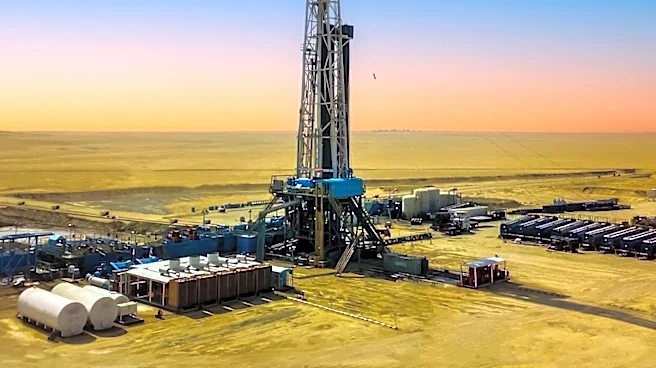
for naming proposals on October 23, with a deadline of October 29. This move comes as Nairobi-based Gulf Energy aims to commence production by December 1, over 14 years after the oil discovery. The chosen name will serve to identify Kenyan crude in international trading, shipping, and price reporting, similar to established grades like Brent. Proposals must be distinctly Kenyan, easy to pronounce, represent the entire nation, be free of political or divisive associations, and be eligible for trademark registration both domestically and internationally. Gulf Energy plans to begin drilling on November 1, with initial production from the Ngamia and Amosing fields projected to reach 20,000 barrels per day (bpd) during the first phase (2026–2032).
Why It's Important?
This development is significant for Kenya as it marks a crucial step towards commercializing its oil reserves and establishing its presence in the global energy market. A distinct trading name is essential for branding and facilitating international transactions, potentially attracting more foreign investment and stabilizing export revenues. The planned December 1 production target, if met, could provide a new revenue stream for the Kenyan economy, supporting national development goals. However, the project faces challenges, including community grievances over alleged unpaid compensation and land acquisition, which could lead to disruptions. The success of this venture could also influence future exploration and production activities in other African nations with nascent oil industries, setting a precedent for how such resources are brought to market and managed in terms of local community engagement.
What's Next?
The immediate next step involves the selection of a commercial trading name for the Turkana crude oil, with submissions closing on October 29. Gulf Energy is scheduled to begin drilling on November 1, targeting first oil production by December 1. However, the exact export timetable remains uncertain, with EPRA's petroleum and gas director Edward Kinyua anticipating the first export cargo in the first quarter of 2027, while President William Ruto has indicated sales to foreign buyers could begin in December. The government has not yet announced when the trading name will be officially selected or if a binding export sales contract has been finalized. Addressing community grievances regarding compensation and land acquisition will be critical to avoid potential obstructions to extraction and transportation. The completion status of required environmental and social impact assessments also needs confirmation.
Beyond the Headlines
The commercialization of Kenya's Turkana crude oil carries broader implications beyond immediate economic gains. The process of naming the crude and establishing its international identity reflects a nation's aspiration to assert its sovereignty and economic independence in the global energy landscape. The challenges related to community compensation and land rights highlight the complex social and ethical dimensions inherent in large-scale resource extraction projects. How Kenya navigates these issues will set a precedent for responsible resource management and community engagement, potentially influencing future investment decisions by international companies. The project's success or failure could also impact regional energy dynamics and the broader narrative of African nations leveraging their natural resources for sustainable development, while balancing environmental and social responsibilities.