





What's Happening?
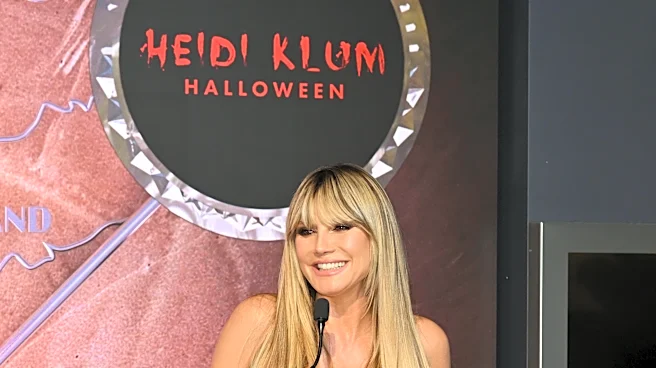
Fashion brand s.Oliver has launched its new 'Casual Since Forever' campaign, featuring supermodel Heidi Klum alongside an AI-generated younger version of herself from the 1990s. The campaign includes a video and images depicting the two versions of Klum interacting,
aiming to connect the model's career beginnings in the 90s with the brand's Vintage Collection. The initiative seeks to sharpen s.Oliver's positioning as a casual brand by leveraging Klum's personal history and the current resurgence of 90s fashion trends. The campaign highlights sportswear-inspired looks, loose fits, denim, sweatshirts, T-shirts, and prominent logos, all characteristic of the era. While the AI-generated imagery is clearly marked, the campaign aims to tell a story of evolution and constancy, both for Klum and the s.Oliver brand, emphasizing a timeless casual style.
Why It's Important?
This campaign is significant as it showcases a growing trend in advertising: the use of artificial intelligence to create compelling and attention-grabbing visuals. By digitally reconstructing a younger Heidi Klum, s.Oliver is exploring innovative ways to engage consumers and create a unique narrative. This approach allows brands to tap into nostalgia while simultaneously presenting a modern image. The campaign's success could influence other fashion and lifestyle brands to adopt similar AI-driven strategies, potentially leading to a shift in how celebrity endorsements and historical brand narratives are presented. It also raises questions about authenticity in advertising, even with clear AI labeling, as it blurs the lines between genuine historical representation and digitally manufactured content. The integration of direct product links and a sweepstakes further illustrates how brands are trying to convert emotional storytelling into direct sales and customer engagement.
What's Next?
The success of s.Oliver's campaign will likely be measured by its ability to translate increased brand awareness into sales for its Vintage Collection and new customer acquisitions for its bonus program. If the campaign proves effective, it could pave the way for more widespread adoption of AI in fashion advertising, potentially leading to more sophisticated and personalized marketing efforts. Other brands might explore similar concepts of 'time travel' or 'digital de-aging' for their celebrity endorsers. However, the industry will also need to address ongoing discussions about transparency and the ethical implications of using AI to create or alter human likenesses in advertising. Future campaigns may see more detailed disclosures about AI usage to ensure consumer trust and avoid potential backlash regarding perceived inauthenticity.
Beyond the Headlines
The s.Oliver campaign delves into deeper implications concerning the intersection of technology, celebrity, and consumer perception. The use of AI to create a 'younger self' for Heidi Klum touches upon themes of identity, aging, and the digital manipulation of reality. While presented as a creative marketing tool, it subtly challenges traditional notions of authenticity in media. The campaign's reliance on 90s nostalgia also highlights a broader cultural trend of revisiting past eras, often through an idealized lens, to connect with diverse consumer demographics. This approach could lead to a future where brands routinely construct idealized versions of the past or even speculative futures to sell products, raising ethical questions about historical accuracy and the potential for digital fabrication to shape collective memory. The campaign serves as a case study for how AI can be integrated into storytelling, not just as a technical feat, but as a means to convey complex brand messages about evolution and timelessness.