



What's Happening?
George Russell, a Mercedes driver, has attributed his inconsistent performance in the 2026 Formula 1 season to the unique driving requirements imposed by the new power units and high rear tire pressures. Russell, who typically excels by focusing on mid-to-exit
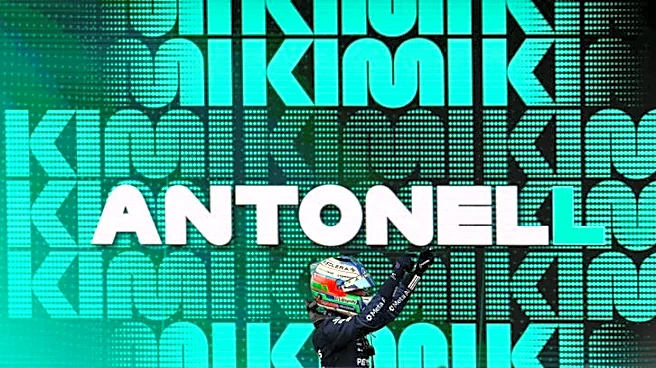
corner momentum and early throttle application, finds that this style is less efficient with the energy-starved power units. This forces him to expend more energy, which is not optimal for the new regulations. Additionally, Pirelli's increased rear tire pressures further hinder his natural driving approach, as the tires cannot cope as effectively with aggressive corner exits. Despite having what is considered the best car on the grid, Russell has secured only three victories from 18 races, leading to a significant points deficit against his less experienced teammate, Kimi Antonelli, who is on the verge of clinching the championship. Russell acknowledges his struggles and expresses confusion over the variability of his performance, citing instances where he has been dominant in one race and significantly underperforming in another.
Why It's Important?
This situation highlights the critical impact of technical regulations on driver performance and team dynamics within Formula 1. Russell's struggles, despite driving a dominant car, underscore that even top-tier drivers must adapt their fundamental techniques to new car specifications. This can lead to unexpected shifts in competitive hierarchies, as seen with Antonelli's strong performance against Russell. For Mercedes, understanding and addressing these driving style mismatches is crucial for maximizing their car's potential across both drivers. The insights gained from Russell's experience could influence future car development and driver training strategies, emphasizing adaptability to evolving technical rules. It also brings into focus the role of tire manufacturers like Pirelli in shaping racing dynamics through pressure specifications, which can inadvertently favor or disadvantage certain driving styles. The outcome of this season could prompt a re-evaluation of how teams prepare drivers for significant regulatory changes.
What's Next?
George Russell plans to engage in a period of self-reflection and objective analysis with his team to understand and rectify his performance inconsistencies. He emphasizes a focus on improving his own performance rather than directly aiming to beat his teammate, Kimi Antonelli. Russell intends to work with sports psychologists, a practice he has maintained for seven years, to maintain a cool head and avoid emotional decision-making that could exacerbate the situation. The goal is to identify the specific factors that contribute to his strong performances and replicate them more consistently, while eliminating the elements leading to poor results. This winter will be crucial for Russell to adapt his driving style and mental approach to the demands of the F1 2026 regulations, aiming for a stronger comeback in the subsequent season. His efforts will likely involve detailed data analysis, simulator work, and continued collaboration with his engineering team to fine-tune car setup to better suit his adapted style.
Beyond the Headlines
Russell's candid admission about his struggles offers a rare glimpse into the psychological and technical challenges faced by elite athletes in highly competitive environments. It debunks the notion that success is solely about raw talent, emphasizing the continuous need for adaptation, self-analysis, and mental fortitude. The situation also raises questions about the long-term impact of regulatory changes on driver careers; drivers who struggle to adapt might see their careers plateau or decline, even if they were previously considered top performers. This scenario could lead to a greater emphasis on driver versatility and adaptability in junior categories and driver development programs. Furthermore, it highlights the intricate relationship between human performance and advanced engineering, where even minor technical adjustments can have profound effects on a driver's ability to extract maximum performance, underscoring the holistic nature of success in Formula 1.