



What's Happening?
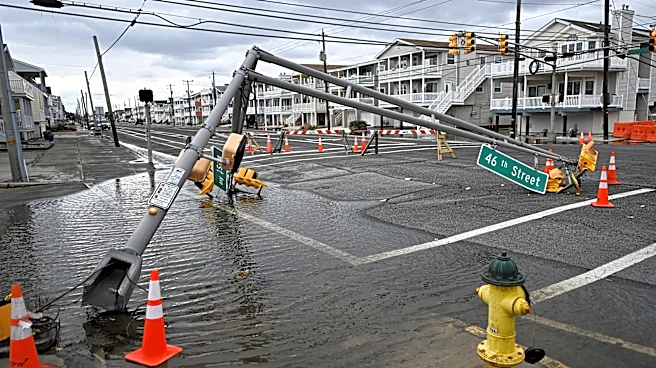
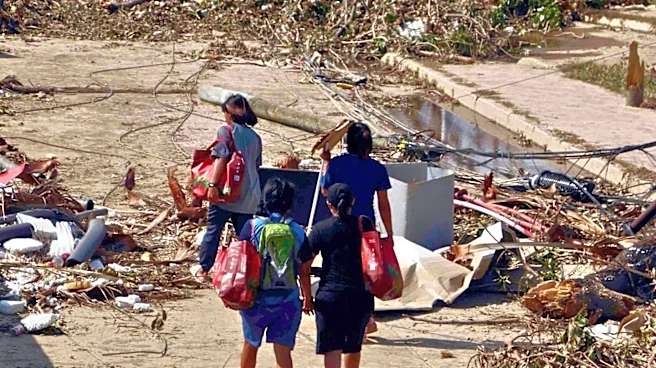
Small businesses in Pacifica, California, are facing significant economic hardship despite an influx of visitors drawn to the town's storm-damaged coastline. Powerful waves and king tides have caused extensive damage, including the collapse of part of the Pacifica Pier
and temporary street closures, attracting what locals are calling 'trauma tourists.' These visitors come to observe the destruction but often leave without patronizing local shops and restaurants. Rita Prichard Anderson, owner of In The Attic, an antique mall, reported a 30% drop in business since the pier closure and street disruptions. While some visitors do make purchases, many are solely there to witness the devastation. On Small Business Saturday, local merchants, including Prichard Anderson and Brian Van Veen of Chorus Fragrance, hoped for an outpouring of community support to counteract the negative economic impact.
Why It's Important?
This situation in Pacifica highlights the vulnerability of local economies, particularly small businesses, to natural disasters and their unexpected social consequences. While the damage attracts attention, the lack of corresponding economic activity from 'trauma tourists' exacerbates the challenges faced by these businesses. The closure of the Pacifica Pier, a significant tourist draw, has directly impacted foot traffic and sales, demonstrating how critical infrastructure can be to local commerce. The struggle of Pacifica's small businesses reflects a broader issue where communities recovering from environmental events may experience a surge in visitors who do not contribute to the local economy, creating a paradoxical situation of high visibility but low revenue. This scenario underscores the need for targeted support and strategies to convert disaster-related tourism into beneficial economic activity for affected communities.
What's Next?
Pacifica business owners are actively seeking increased support from both local and surrounding communities, especially during the holiday season. Ed Ochi, a Pacifica resident, urged visitors to make a conscious effort to patronize local shops and restaurants after viewing the damaged coastline. The American Express Shop Small Impact Study for 2026 indicated a high intent among U.S. consumers to shop at small businesses during the holidays, suggesting a potential avenue for recovery if this intent translates into action in Pacifica. However, without significant changes in visitor behavior or external aid, some local businesses, as predicted by Ochi, may be forced to close in the coming months. The community's efforts to encourage local shopping and dining are crucial for the survival of these establishments and the overall economic health of Pacifica.
Beyond the Headlines
The phenomenon of 'trauma tourism' in Pacifica raises complex questions about disaster response, community resilience, and the ethics of observation. While natural disasters are often public spectacles, the economic and emotional toll on affected communities can be profound. The term 'trauma tourists' itself suggests a disconnect between the observers and the observed, where the spectacle of destruction overshadows the human and economic suffering. This situation could prompt discussions on how communities can better manage and benefit from disaster-related attention, perhaps through organized tours that include local business engagement or public awareness campaigns that encourage economic support. It also highlights the psychological impact on residents and business owners who must contend with both the physical damage and the emotional burden of being a spectacle, rather than receiving direct aid or economic uplift from visitors. This could lead to new models for disaster recovery that integrate economic revitalization with community well-being.