




What's Happening?
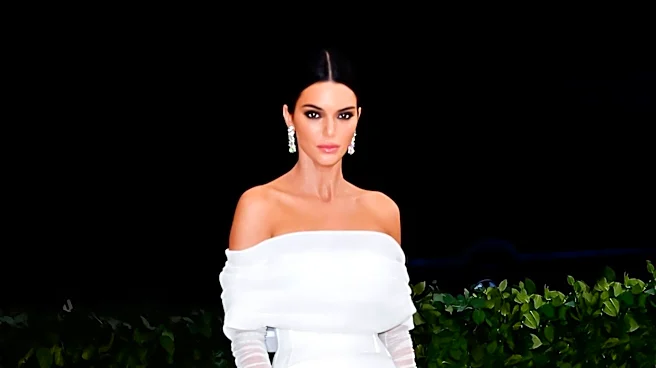
Kendall Jenner recently purchased a pair of rare Alexander Calder earrings from London-based gallerist Louisa Guinness. These earrings, dating back to 1955 and crafted from hammered silver and steel wire, were a notable accessory during her appearance
at the Venice Film Festival. Guinness, who specializes in collecting and dealing artist-made jewelry, confirmed that Jenner bought the pieces rather than borrowing them, indicating a genuine interest in the art behind the jewelry. The acquisition process involved the Calder Foundation, a New York collector, and Jenner’s stylist, Danielle Goldberg, before reaching Guinness's gallery. Calder's jewelry, though less known than his abstract mobiles, is highly collectible, with earrings and rings being particularly scarce. Jenner is also recognized as an art collector, with her collection including works by James Turrell, Tracey Emin, and Barbara Kruger.
Why It's Important?
This acquisition by a prominent public figure like Kendall Jenner brings significant attention to the niche market of artist-made jewelry. Her purchase, rather than a loan, suggests a deeper engagement with the art world, potentially inspiring a new generation of collectors to explore wearable art beyond established luxury brands. This could lead to increased demand and appreciation for pieces by artists who incorporated jewelry into their broader artistic practices, such as Calder, Man Ray, and Anish Kapoor. For gallerists like Louisa Guinness, such high-profile transactions validate their decades-long efforts in promoting artist-made jewelry and could open doors for wider recognition and investment in this unique segment of the art market. It also underscores the growing trend of celebrities influencing art and fashion trends, potentially shifting consumer interest towards more unique, historically significant, and artistically driven accessories.
What's Next?
The increased visibility of artist-made jewelry due to Jenner's acquisition may lead to a surge in interest from both established art collectors and new enthusiasts. Louisa Guinness anticipates this could encourage exploration of other artists who have created jewelry, suggesting potential future collaborations or acquisitions involving minimalist pieces by artists like Anish Kapoor or vintage works by figures such as Lucio Fontana. This trend could also prompt more art institutions and galleries to feature artist-made jewelry in their exhibitions, further integrating it into the mainstream art discourse. For the fashion industry, it might signal a move towards more unique, art-centric accessories on red carpets and in editorial features, influencing stylists and designers to seek out similar pieces. The long-term impact could be a re-evaluation of jewelry as a significant art form, rather than merely a decorative item, fostering a more robust market for these unique creations.
Beyond the Headlines
Kendall Jenner's purchase of Alexander Calder earrings highlights a broader cultural shift towards valuing authenticity and artistic merit in luxury goods. In an era dominated by mass-produced fashion and brand-driven consumption, her choice to invest in a unique, artist-made piece reflects a desire for individuality and a connection to art history. This move transcends mere fashion; it positions jewelry as an extension of fine art, challenging traditional distinctions between decorative arts and high art. Ethically, it supports the legacy of artists whose contributions to jewelry design might otherwise be overshadowed by their more famous works. Culturally, it could foster a deeper appreciation for craftsmanship and artistic expression in everyday objects, encouraging consumers to consider the provenance and artistic value of their possessions. This trend could also influence how art is collected and displayed, blurring the lines between personal adornment and museum-worthy pieces, and potentially inspiring a new wave of artists to explore wearable art.