





What's Happening?
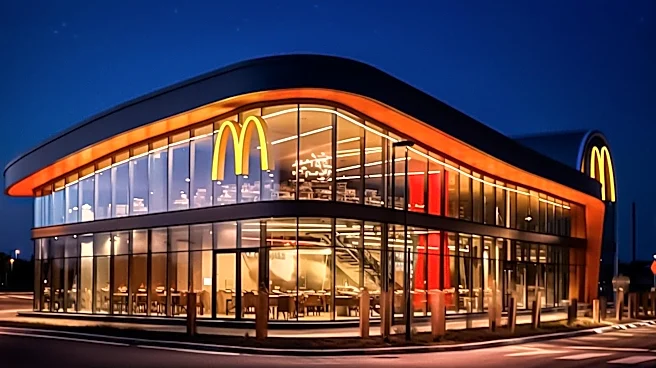
Chris Kempczinski, CEO of McDonald's, has acknowledged that while the company has not yet observed a significant impact from GLP-1 medications on its business, there has been an increase in adult orders for children's meals. This trend suggests a shift
in consumer eating habits, potentially influenced by the growing use of GLP-1 drugs for weight loss. Kempczinski stated that McDonald's will need to adapt its menu to cater to these evolving consumer preferences as more individuals utilize these medications. This comes as other food industry players, like Olive Garden and Chipotle, have already begun adjusting their offerings with smaller portions or protein-rich options to attract consumers on GLP-1 medications. The broader food industry is experiencing a transformation, with analysts from JP Morgan estimating a potential decline of up to $55 billion in food and beverage sector revenues by 2030 due to the widespread adoption of GLP-1 treatments.
Why It's Important?
The statements from McDonald's CEO highlight a significant and emerging challenge for the U.S. food industry. The increasing prevalence of GLP-1 medications is fundamentally altering consumer behavior, moving away from the decades-long industry model of encouraging larger consumption. This shift impacts not only the quantity of food consumed but also the types of food desired, with a growing preference for protein and fiber and a reduction in items like bread, pasta, alcohol, snacks, and sugary drinks. For companies like McDonald's, which have historically relied on high-volume sales of calorie-dense foods, this necessitates a strategic re-evaluation of their product offerings and marketing. The potential $55 billion revenue decline projected by JP Morgan underscores the substantial financial implications for the food and beverage sector, forcing companies to innovate and adapt to a new dietary landscape or risk losing market share to more agile competitors.
What's Next?
McDonald's is expected to develop and implement menu adaptations to address the changing consumer landscape influenced by GLP-1 medications. This could involve introducing more protein-focused options, smaller portion sizes, or healthier alternatives, similar to strategies already adopted by competitors like Chipotle and Olive Garden. The company's CEO has indicated that menu changes are inevitable as GLP-1 usage becomes more widespread. The broader food industry will likely continue to see a proliferation of products designed for GLP-1 users, such as high-protein frozen meals, yogurts, and snacks. This adaptation will be crucial for companies to maintain relevance and profitability in a market where consumers are increasingly prioritizing health and portion control. The upcoming investor day for McDonald's may provide further details on their long-term strategy to navigate these shifts.
Beyond the Headlines
The impact of GLP-1 medications extends beyond just the food industry, signaling a broader societal shift in health and consumption patterns. The increased focus on protein and fiber, coupled with reduced calorie intake, could lead to a healthier population, potentially decreasing the incidence of obesity-related diseases. This could have long-term implications for the healthcare sector, insurance companies, and even public health policy. Furthermore, the shift in consumer spending, with less on food and more on items like new clothing due to weight loss, suggests a ripple effect across various retail sectors. The challenge for businesses will be to not only adapt their products but also to understand and cater to the evolving values and priorities of a consumer base increasingly empowered by medical advancements to manage their health and weight.