


What's Happening?
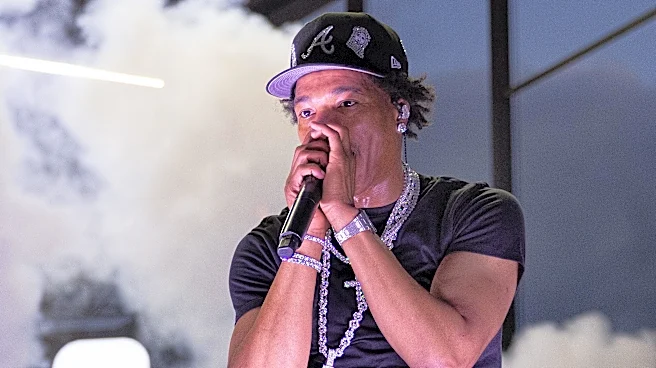
Rapper Lil Baby has defended his assertion that his music catalog possesses the same type of longevity as Mary J. Blige's. During an appearance on the 'Joe and Jada' podcast, hosted by Fat Joe and Jadakiss, Lil Baby discussed the concept of creating timeless
music. When Fat Joe questioned if he had 'Mary J. Blige type hits,' Lil Baby responded affirmatively. He later clarified his comments on Instagram, stating he meant 'same type' of hits, not 'more than or bigger hits,' emphasizing that he would 'Never discredit a legend like Mary J.' The discussion arose from a broader conversation about whether contemporary rappers focus on creating music that will remain relevant for decades, or if their intention is primarily for short-term success. Lil Baby acknowledged that while artists don't always intentionally create songs for 20-year longevity, a 'good song will last forever.'
Why It's Important?
This discussion highlights a significant debate within the music industry regarding artistic intent, legacy, and the definition of a 'timeless' hit. Mary J. Blige, with a career spanning over three decades and nine Grammy Awards, represents a benchmark for longevity and consistent impact in R&B and hip-hop soul. Lil Baby's comparison, even with his subsequent clarification, underscores the aspiration of many contemporary artists to achieve similar lasting relevance. The exchange also brings to light the differing perspectives between generations of artists on how music is created and consumed, and whether the focus is on immediate chart success or enduring cultural significance. This conversation can influence how artists approach their craft, potentially encouraging a greater emphasis on quality and long-term appeal in an industry often driven by rapid trends.
What's Next?
The conversation initiated by Lil Baby's comments is likely to continue within music industry circles and among fans, potentially sparking further debate on the criteria for musical longevity and the legacy of contemporary artists. Artists may be prompted to reflect on their own creative processes and career goals in light of these discussions. The release of Lil Baby's new album, 'Fresh,' and his collaborations with producers like Pharrell Williams, will offer a new body of work for critics and fans to evaluate in the context of his statements about timeless music. This ongoing dialogue could also influence how music critics and industry analysts assess the long-term potential of new releases and emerging artists.
Beyond the Headlines
The debate over 'timeless' music extends beyond mere commercial success, touching upon cultural impact, artistic integrity, and the evolving nature of music consumption. In an era dominated by streaming and rapid content cycles, the concept of a song lasting for decades faces new challenges. This discussion implicitly raises questions about the role of nostalgia versus innovation in music, and how different generations perceive and value musical artistry. It also highlights the pressure on artists to not only produce hits but also to cultivate a legacy that transcends fleeting trends. The comparison to an established legend like Mary J. Blige serves as a reminder of the high bar set by artists who have achieved enduring cultural significance.