






What's Happening?
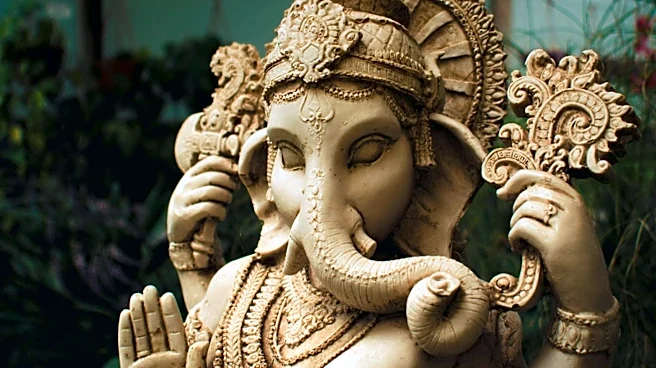
A 50-foot (15.315-meter) Ganesha sculpture in Gianyar, Bali, has been officially recognized by Guinness World Records as the world's tallest supported synthetic rattan sculpture. Created by Alas Harum Bali, the towering figure depicts Ganesha, the Hindu
deity associated with wisdom, success, good fortune, and new beginnings. The Indonesian Embassy in New Delhi announced this achievement on Facebook, emphasizing the cultural significance of the installation. While Indonesia is predominantly a Muslim-majority nation, Bali is a Hindu-majority province where Hindu religious practices are deeply integrated into daily life. This new landmark adds to Bali's rich Hindu heritage, which includes numerous temples like Pura Besakih and Tanah Lot, and traditions influenced by Hindu epics such as the Ramayana and Mahabharata.
Why It's Important?
This recognition by Guinness World Records elevates Bali's profile as a unique cultural and tourist destination on the global stage. The Ganesha sculpture not only serves as a new landmark but also highlights the enduring Hindu heritage within Indonesia, a country with the world's largest Muslim population. For Bali, this reinforces its distinct cultural identity and may attract more tourists interested in its spiritual and artistic traditions. The achievement underscores the island's ability to blend traditional religious symbolism with modern artistic and engineering feats, potentially boosting local tourism and the economy. It also showcases the craftsmanship and innovation of Alas Harum Bali, bringing international attention to local artists and materials.
Beyond the Headlines
The Ganesha sculpture's recognition extends beyond a mere tourism boost; it symbolizes the resilience and prominence of Hindu culture in Bali amidst a larger Muslim-majority nation. This cultural expression, recognized globally, can foster greater understanding and appreciation of Indonesia's diverse religious landscape. It also highlights the potential for art and cultural installations to become significant economic drivers and points of national pride. The use of synthetic rattan, a modern material, for a traditional deity also speaks to a blend of tradition and innovation, potentially inspiring future artistic and architectural endeavors that honor cultural roots while embracing contemporary methods.