






What's Happening?
Melanie Griffith's portrayal of Tess McGill in the 1988 film 'Working Girl' is being cited as a significant influence on current fashion trends, particularly the resurgence of power suits. The film depicted McGill as an ambitious secretary at a financial
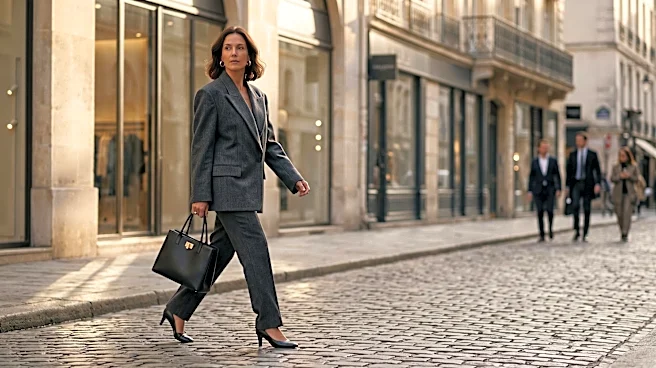
firm, known for her distinctive lapel-loving style. This influence is highlighted in discussions about fall runway collections, where designers are showcasing suits that evoke a sense of confidence and fierceness, moving beyond traditional office wear. The aesthetic of 'Executive Realness' from the 1990 documentary 'Paris Is Burning,' which featured individuals strutting in Wall Street-inspired ensembles, is also referenced in connection with Griffith's character. The current trend in power suits is described as mean and lean, even with hulking fabrics, exuding a carnal and confident vibe rather than a corporate one. This shift suggests that modern interpretations of the power suit are less about cubicle cosplay and more about making a bold fashion statement outside of the traditional workplace.
Why It's Important?
The enduring influence of Melanie Griffith's 'Working Girl' character on contemporary fashion underscores a broader cultural shift in how professional attire is perceived and utilized. The film's depiction of Tess McGill as a determined woman navigating the corporate world resonated with audiences and established a powerful image of female ambition. The current trend of power suits, inspired by this era, signifies a re-evaluation of traditional workwear. With many professionals working remotely or in more casual environments, the suit is transforming from a strict office uniform into a versatile fashion statement for social events and personal expression. This evolution impacts the fashion industry by driving demand for specific styles and influencing design choices. It also reflects changing societal norms around gender, power, and professional identity, where clothing can convey confidence and individuality rather than strict adherence to corporate dress codes. The shift suggests that consumers are seeking investment pieces that offer glamour and sophistication for various occasions, rather than solely for the workplace.
What's Next?
The continued relevance of 'Working Girl' in fashion discussions suggests that its influence may extend to future collections and styling trends. Designers are likely to further explore the themes of confidence and individuality in their interpretations of power suits, potentially leading to more diverse and unconventional designs. We may see an increased emphasis on mixing and matching suit components with other wardrobe items, such as pairing jackets with slip dresses or trousers with slinky tops, as suggested by fashion editors. This trend could also encourage consumers to view suits as versatile investment pieces for evening wear and social events, rather than just for professional settings. The ongoing dialogue about the appropriateness of various attire in the workplace, including crop tops, indicates a broader redefinition of professional dress codes, which could further solidify the suit's role as a fashion-forward item rather than a corporate necessity. This evolution will likely continue to shape consumer purchasing habits and the offerings of fashion retailers.
Beyond the Headlines
The enduring appeal of Melanie Griffith's 'Working Girl' and its impact on fashion trends speaks to deeper cultural narratives about female empowerment and aspiration. Tess McGill's journey from secretary to executive symbolized breaking barriers and achieving professional success, making her a lasting icon. The re-emergence of the power suit, inspired by this era, can be seen as a contemporary reinterpretation of these themes. It reflects a desire for clothing that conveys strength and self-assurance, even as the traditional corporate landscape changes. The shift from suits as strictly office wear to versatile fashion statements for social occasions highlights a blurring of lines between professional and personal identity, where individuals seek to express their power and style in all aspects of their lives. This trend also subtly challenges traditional gender roles in fashion, as women reclaim and redefine garments historically associated with male authority, infusing them with new meanings of confidence and allure. The cultural resonance of 'Working Girl' continues to inspire discussions about ambition, identity, and the evolving role of women in society.