



What's Happening?
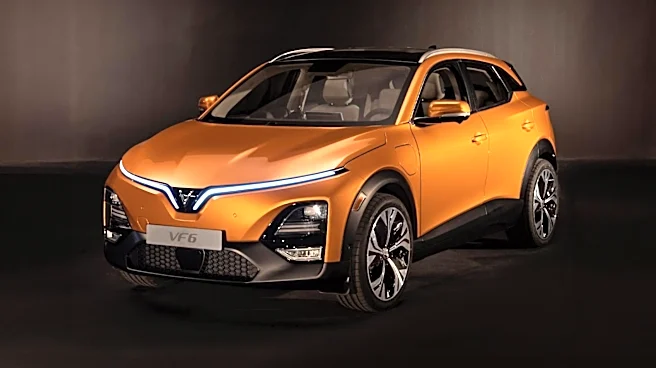
VinFast, a Vietnamese electric vehicle manufacturer, is intensifying its commitment to the U.S. market despite some automakers scaling back EV ambitions. The company announced an initial agreement with NexMove on October 6, 2026, to introduce its electric buses
to U.S. customers. NexMove, a joint venture, plans to offer a comprehensive service including buses, charging, maintenance, and operations, with certified bus deliveries expected in the first quarter of 2028. This follows VinFast's September 2026 franchise agreements for three U.S. dealerships in California and Pennsylvania, aimed at expanding sales and after-sales service access. VinFast's broader strategy focuses on building an integrated network of vehicles, charging infrastructure, and services to support both individual drivers and commercial fleets. The company also highlights the cost savings for EV drivers, citing a Q3 2024 analysis by Coltura that estimated U.S. EV drivers saved an average of 7.4 cents per mile on fuel, translating to approximately $1,100 annually for those driving 1,200 miles a month.
Why It's Important?
VinFast's continued expansion in the U.S. electric vehicle market signals a significant push for increased competition and broader EV adoption. By focusing on both consumer and commercial segments, including electric buses, VinFast is addressing diverse market needs and potential barriers to EV integration. The partnership with NexMove aims to simplify the transition for transit agencies and fleet operators by bundling essential services, which could accelerate the electrification of public and commercial transportation. For consumers, the expansion of dealerships and the introduction of a certified pre-owned program offer more accessibility and affordability options, potentially lowering the entry barrier for EV ownership. This strategic move could also drive innovation and competitive pricing among EV manufacturers in the U.S., ultimately benefiting consumers and contributing to national climate goals by increasing the availability and practicality of electric mobility solutions.
What's Next?
VinFast plans to place demonstration electric buses at Zeem's charging depots for transit agencies and fleet operators to evaluate before certified deliveries begin in Q1 2028. The company will continue to build out its sales and service operations across North America, including further expanding its dealership network. VinFast's long-term commitment to its 2040 net-zero goal will guide future investments in manufacturing, energy efficiency, and supply chain emissions reduction. The company's 3E Mission—Electrification, Energy Saving, and Energy Greening—will drive its operational changes, including electrifying production equipment by 2030, implementing smart energy monitoring by 2028, and aiming for 100% renewable electricity at all plants by 2040. These steps indicate a sustained effort to integrate electric vehicles more deeply into the U.S. transportation landscape and achieve ambitious sustainability targets.
Beyond the Headlines
VinFast's aggressive entry and expansion in the U.S. EV market, particularly with its focus on both passenger vehicles and commercial buses, highlights a broader global shift in automotive manufacturing and market dynamics. While some established automakers have adjusted their EV strategies, VinFast's steadfast commitment underscores the long-term potential seen by newer players in the electric mobility sector. This commitment also reflects a strategic alignment with global climate initiatives, as evidenced by VinFast being the first Vietnamese enterprise to sign The Climate Pledge. The company's comprehensive approach, from manufacturing to after-sales service and charging infrastructure, suggests an understanding that successful EV adoption requires more than just producing vehicles; it demands an entire ecosystem. This could set a precedent for how new entrants challenge traditional automotive giants, emphasizing integrated solutions and sustainability as key competitive advantages in the evolving U.S. automotive landscape.