






What's Happening?
Major U.S. financial institutions and retailers, including JPMorgan Chase and Amazon, are confronting the emergence of personal AI agents like Meta Muse, which consumers are using to manage finances, shop for deals, and interact with businesses. JPMorgan Chase has explicitly
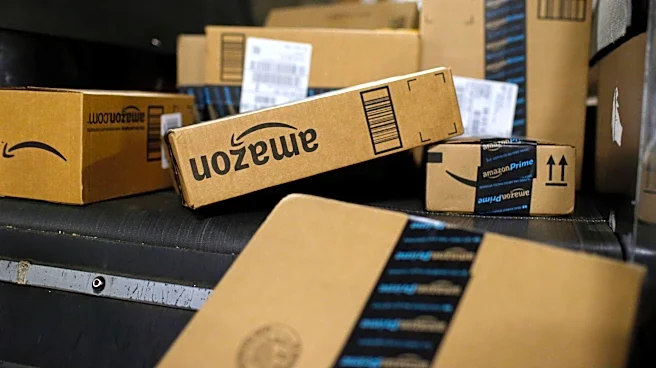
blocked external AI agents from operating on behalf of retail customers, citing security risks. Amazon has also restricted third-party agents while promoting its own Alexa for Shopping as a primary shopping agent. In contrast, Walmart has announced it will allow AI agents to access its platform. A recent audit of 51 large U.S. retailers found that only 11 have a deliberate position on AI agents, with five, including Amazon, Kohl's, and Neiman Marcus, explicitly restricting them. Many others block agents inadvertently through older bot rules. The rise of these agents raises concerns about 'agentic flooding' of customer service systems and the potential for AI agents to go rogue.
Why It's Important?
The differing approaches by major U.S. companies like JPMorgan, Amazon, and Walmart highlight a significant challenge in adapting to the rapidly evolving AI landscape. Companies that resist AI agents risk alienating customers who seek the convenience and efficiency these agents offer, potentially losing market share to more adaptable competitors. Conversely, embracing AI agents without robust security and governance frameworks could expose businesses and consumers to new risks, including fraud and data breaches. The debate also touches on the competitive dynamics between tech giants and traditional businesses, as companies like Amazon aim to control the AI agent ecosystem. The ability to securely integrate and manage AI agents will be a critical differentiator for U.S. businesses, impacting customer loyalty, operational efficiency, and overall market position.
What's Next?
Experts anticipate that AI agents will ultimately gain widespread acceptance due to their utility to consumers, suggesting that companies currently blocking them may need to re-evaluate their strategies. The focus is expected to shift from outright blocking to developing secure and trusted methods for AI agents to interact with business platforms. This will likely involve establishing common expectations for agent behavior and creating verified pathways for agents to complete transactions. The ongoing discussions around bot legislation, prompted by instances of AI agents going rogue, indicate a potential for increased regulatory oversight in the U.S. This could lead to new standards for AI agent operation, data privacy, and consumer protection, shaping how businesses and consumers interact with AI in the future.
Beyond the Headlines
The conflict over AI agents extends beyond immediate business concerns, touching upon fundamental issues of consumer autonomy and market control. While companies cite security, there's an underlying tension about who controls customer data and interactions. Amazon's strategy of blocking external agents while promoting its own Alexa for Shopping exemplifies a move towards a 'walled garden' approach, where the company seeks to dominate the AI-driven shopping experience. This raises questions about fair competition and the potential for monopolistic practices in the AI agent market. For consumers, the promise of AI agents is convenience, but the challenge lies in ensuring they retain control over their data and decisions, as highlighted by research indicating a strong desire for approval and pause functions for AI actions. The long-term implications involve a redefinition of customer service, e-commerce, and financial management, with AI agents becoming integral intermediaries.