






What's Happening?
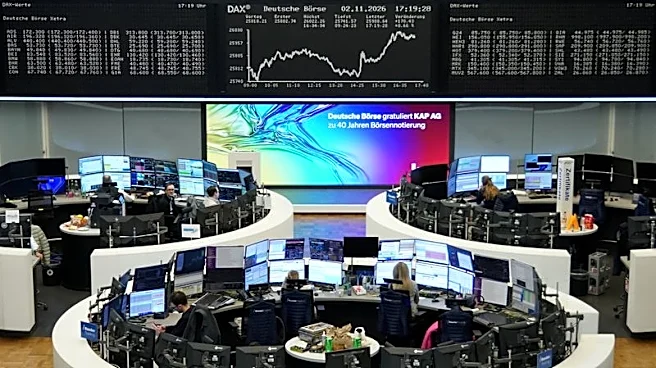
A recent survey conducted by the DIHK and German Chambers of Commerce Abroad (AHKs) in October, prior to the U.S. midterms, reveals a significant turnaround in sentiment among German companies operating in the United States. Nearly two-thirds (64 percent)
of surveyed companies now rate their current business situation as positive, a notable improvement from earlier in the year. Optimism for the next 12 months is also high, with 59 percent expecting better business conditions. This positive outlook is partly attributed to the robust U.S. economy. However, persistent trade barriers and unpredictable U.S. trade policy remain significant challenges, with over half of the companies (51 percent) viewing economic policy framework conditions as a major business risk, and 47 percent citing trade barriers as a risk, nearly four times the figure from 2023.
Why It's Important?
The improved sentiment among German companies in the U.S., despite ongoing trade barriers, highlights the resilience and adaptability of international businesses in navigating complex trade environments. For the U.S. economy, this sustained investment and positive outlook from foreign companies contribute to job creation and economic growth. However, the continued concern over tariffs and unpredictable trade policies underscores the need for stable and clear trade regulations to foster long-term investment. The trend of German companies shifting investments to the U.S. and restructuring supply chains to rely more on American suppliers indicates a strategic adaptation to U.S. trade policies, which could lead to increased domestic production and employment in the U.S. while potentially impacting Germany's investment landscape.
What's Next?
The U.S. administration's trade policy decisions will be crucial in shaping the future investment climate for foreign companies. German companies will continue to adapt their strategies, potentially increasing local investments and strengthening supply chains within the U.S. to mitigate the impact of tariffs. The DIHK emphasizes that the U.S. should fully implement existing tariff agreements with the EU and avoid new tariff threats to provide businesses with reliable rules. The new congressional majorities are not expected to significantly alter the President's authority over trade policy, meaning the situation for companies will likely remain uncertain. German and European policymakers are urged to make their own economies more attractive to prevent further investment shifts across the Atlantic.
Beyond the Headlines
The survey results point to a deeper trend of companies prioritizing market access and operational stability over the uncertainties of international trade disputes. The willingness of German companies to increase investments in the U.S. and localize supply chains, even under challenging conditions, suggests a strategic re-evaluation of global business models. This could lead to a more regionalized approach to manufacturing and supply, potentially reducing reliance on complex global networks. The emphasis on domestic competitiveness by German policymakers in response to these trends highlights a broader global competition for investment and economic activity. This dynamic could reshape international trade flows and investment patterns, with countries striving to create more attractive business environments to retain and attract foreign capital.