





What's Happening?
Nvidia Corporation has introduced CUDA-Q Logical, an open-source orchestration layer integrated into its CUDA-Q platform. This new tool is designed to assist researchers in developing applications for fault-tolerant quantum computers utilizing logical
qubits. The technology was already in use by national laboratories and leading Quantum Processing Unit (QPU) makers prior to its official announcement. Timothy Costa of Nvidia emphasized that quantum computing is progressing into an era of logical qubits, necessitating an open and customizable platform capable of representing all facets of a fault-tolerant system. CUDA-Q Logical aims to provide the power and flexibility required to explore fully integrated, co-optimized systems, irrespective of qubit type and architecture, thereby accelerating the timeline for useful quantum-GPU supercomputing. The tool is publicly available on GitHub and is currently being employed by institutions such as Fermi National Accelerator Laboratory, IQM Quantum Computers, and Sandia National Laboratories.
Why It's Important?
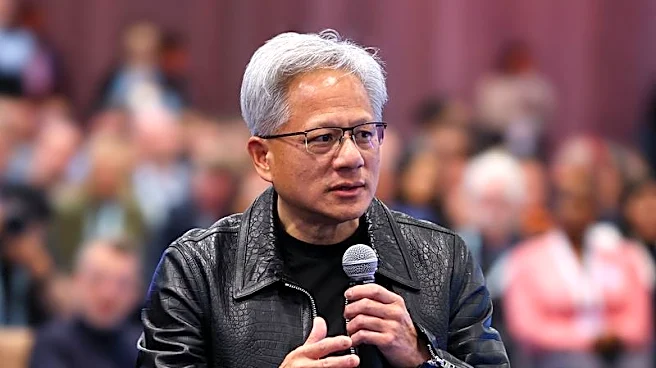
The launch of CUDA-Q Logical is significant for the advancement of quantum computing, particularly in the U.S. research landscape. Fault-tolerant systems based on logical qubits are considered essential for practical quantum applications, including materials development and drug discovery, as they can mitigate errors inherent in individual physical qubits. This development supports Nvidia's broader strategy to establish its GPUs as the primary classical computing layer for hybrid quantum-classical systems. The adoption of CUDA-Q Logical by national laboratories provides a crucial short-term indicator for Nvidia's quantum strategy, reinforcing the company's long-term platform opportunity. While this software enhancement is a step forward, the fundamental hardware challenges associated with scaling quantum systems and achieving a significant increase in qubit scale for truly useful quantum computers remain unresolved, as previously noted by Jensen Huang, CEO of Nvidia.
What's Next?
The immediate next steps involve the continued integration and utilization of CUDA-Q Logical by research institutions and QPU manufacturers. The open-source nature of the tool on GitHub suggests a collaborative development path, potentially leading to rapid iterations and improvements based on community feedback. Nvidia's ongoing investments in quantum computing companies like PsiQuantum, QuEra, and Quantinuum indicate a sustained commitment to the sector, suggesting further advancements in both software and hardware integration. The focus will likely remain on bridging the gap between current quantum capabilities and the long-term vision of fault-tolerant, scalable quantum computers capable of addressing complex real-world problems. The industry will be watching to see how this software development impacts the timeline for achieving practical quantum applications.
Beyond the Headlines
Beyond the immediate technical implications, Nvidia's move highlights a critical tension within the quantum computing field: the interplay between software innovation and hardware limitations. While advanced software like CUDA-Q Logical can streamline development and improve error correction, the physical challenges of building stable and scalable quantum hardware persist. This situation underscores the need for a holistic approach to quantum computing, where breakthroughs in both theoretical and engineering domains are equally vital. The emphasis on 'useful quantum-GPU supercomputing' also points to the increasing convergence of classical and quantum computing, suggesting a future where hybrid systems will be the norm. This convergence could redefine computational paradigms, impacting various industries by enabling previously intractable problems to be solved, albeit with a longer-term horizon for widespread practical application.