






What's Happening?
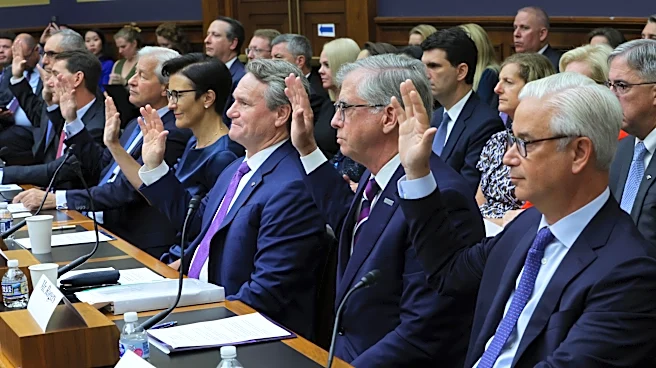
Charlie Scharf, the CEO of Wells Fargo since 2019, has significantly reshaped the bank's operating committee by bringing in numerous former JPMorgan Chase executives. This strategic move has led to a committee now 'teeming' with individuals who previously
worked alongside Scharf at JPMorgan Chase. The appointments are part of Scharf's ongoing efforts to steer Wells Fargo, a major U.S. financial institution, since assuming its top leadership role. The influx of these executives suggests a deliberate strategy to infuse the bank with leadership experienced in a different corporate culture and operational approach, potentially aiming to implement similar strategies or efficiencies that were successful at JPMorgan Chase.
Why It's Important?
This leadership overhaul at Wells Fargo is important because it signals a significant strategic direction for one of the largest banks in the United States. The integration of executives from JPMorgan Chase, a competitor, could lead to substantial shifts in Wells Fargo's corporate culture, operational strategies, and risk management frameworks. For U.S. financial markets, this could mean a more aggressive or disciplined approach to banking services, potentially impacting competition within the sector. Stakeholders, including investors, employees, and customers, will be closely watching to see if these new appointments lead to improved financial performance, enhanced regulatory compliance, or a renewed public image for Wells Fargo, which has faced scrutiny in recent years. The move could also influence talent acquisition trends across the banking industry, as executives move between major financial institutions.
What's Next?
The immediate future will likely involve the integration of these new executives into Wells Fargo's existing structure and the implementation of their strategic vision. This could lead to new initiatives in various departments, from retail banking to investment services. Observers will be looking for changes in Wells Fargo's financial reporting, customer service approaches, and its handling of regulatory matters. The success or failure of these new leadership appointments will be a key indicator of Charlie Scharf's long-term impact on the bank. Further executive appointments or organizational restructuring could also be on the horizon as the new leadership team solidifies its control and direction. The banking industry will be watching to see if this strategy yields the desired results for Wells Fargo.
Beyond the Headlines
The recruitment of a large number of former colleagues by a CEO to a new company raises questions about corporate culture and the transfer of institutional knowledge. While bringing in trusted individuals can streamline decision-making and foster a cohesive leadership team, it also carries the risk of insularity or a lack of diverse perspectives. This trend could also highlight a broader challenge in the financial sector regarding talent mobility and the potential for 'brain drain' from one institution to another. Ethically, it underscores the importance of ensuring that new hires are selected based on merit and suitability for the specific challenges of the new organization, rather than solely on prior relationships. The long-term implications for Wells Fargo's unique identity and its ability to innovate independently of its new leadership's past experiences will be a critical aspect to observe.