

What's Happening?
The U.S. economy experienced a slowdown in growth during the second quarter of 2026, expanding at an annualized rate of 1.5%, which is below the previous quarter's 2.1% and the 2.1% predicted by economists. This deceleration is attributed to a significant
increase in the trade deficit, driven by high demand for AI infrastructure, which outpaced exports. Despite this, consumer spending rose sharply, contributing positively to the GDP. Business investment also remained strong, particularly in AI-related sectors. The labor market continued to show resilience, with low unemployment claims, while inflation pressures eased slightly.
Why It's Important?
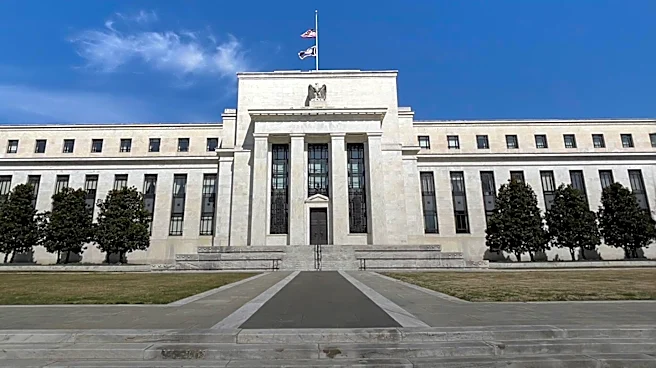
The slowdown in economic growth highlights the challenges posed by a widening trade deficit and the impact of AI infrastructure demand on the economy. While consumer spending and business investments are positive indicators, the trade imbalance could pose long-term risks. The Federal Reserve's focus on inflation, supported by a strong labor market, suggests a cautious approach to monetary policy. The ongoing investment in AI infrastructure indicates a shift in business priorities, potentially leading to future economic benefits. However, geopolitical tensions, such as the war with Iran, continue to create uncertainty and inflationary pressures.
What's Next?
The Federal Reserve may continue to monitor inflation and labor market conditions closely, potentially adjusting interest rates if necessary. Businesses are likely to maintain their investment in AI infrastructure, which could drive future economic growth. Consumer spending trends will be crucial in sustaining economic momentum. Policymakers may need to address the trade deficit to prevent further economic slowdown. The geopolitical situation, particularly the conflict with Iran, will remain a significant factor influencing economic stability and inflation.