






What's Happening?
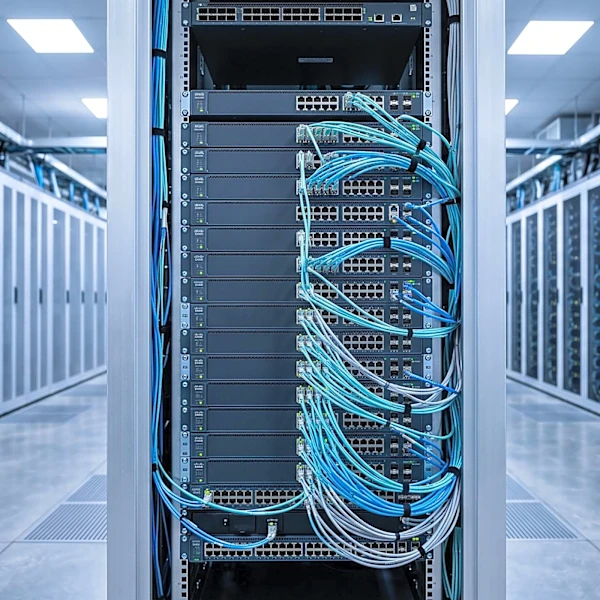
China is rapidly expanding its AI data center infrastructure, particularly in Ulanqab, Inner Mongolia, aiming to become a global leader in artificial intelligence. This city, on the edge of the Gobi desert, is slated to host nearly 90 data centers, with
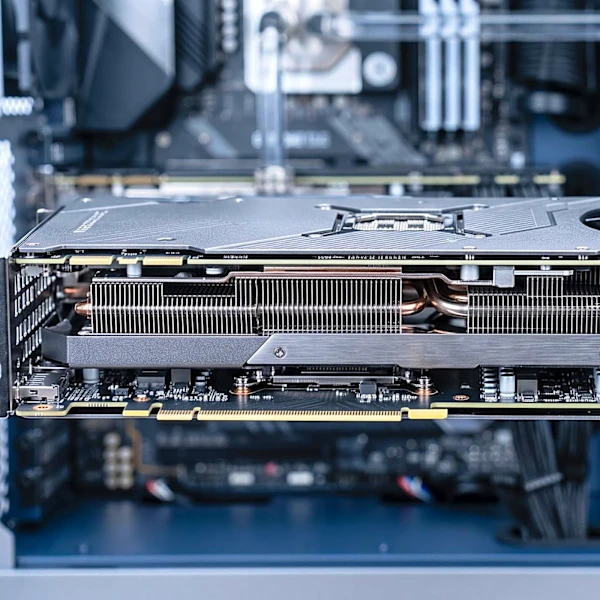
major Chinese tech firms like Huawei and Kuaishou establishing a presence. This rapid build-out is part of Beijing's strategy to fuel its AI boom and drive economic growth. While the U.S. currently has significantly more AI data centers and computing power, China is leveraging its capacity for fast construction, abundant cheap green energy, and lack of public opposition to data center development. However, Chinese firms face a critical bottleneck: U.S. export bans restrict their access to high-end AI chips from companies like Nvidia and AMD. Domestic chipmakers are striving to catch up, but their technology lags, and supplies of advanced models are tight. Nick Corvino, a researcher at the Carnegie Endowment for International Peace, notes that chips are the most crucial factor in data center production costs, and China lacks sufficient supply.
Why It's Important?
This development is important as it highlights the intensifying technological rivalry between the U.S. and China in artificial intelligence, a field expected to define the 21st century. China's aggressive push to build AI infrastructure, despite U.S. chip restrictions, demonstrates its commitment to achieving AI dominance. The U.S. strategy of limiting China's access to advanced chips aims to slow its progress, but China's ability to rapidly construct facilities and utilize its vast green energy resources presents a significant counter-advantage. This competition has profound implications for global economic leadership, national security, and technological innovation. If China successfully develops its AI capabilities, it could reshape industries, military strategies, and geopolitical influence. The U.S. risks falling behind in AI application and deployment if it cannot match China's speed in infrastructure development, even with superior chip technology. This race will determine which nation sets the standards and controls the future of AI.
What's Next?
In the immediate future, China will likely continue its rapid construction of AI data centers, particularly in regions with abundant green energy, under its 'Eastern data, Western compute' strategy. Domestic chipmakers will intensify efforts to close the technology gap with U.S. counterparts, potentially leading to increased government investment and research in semiconductor development. The U.S. may consider further measures to restrict China's access to advanced AI hardware or intellectual property, while also focusing on strengthening its own AI infrastructure and chip manufacturing capabilities. The competition could also spur innovation in alternative AI architectures that are less reliant on cutting-edge chips, or in energy-efficient computing to mitigate the power demands of AI. Both nations will likely continue to invest heavily in AI research and development, leading to a sustained technological arms race. The long-term outcome will depend on each country's ability to overcome its respective challenges—chip supply for China and infrastructure build-out for the U.S.
Beyond the Headlines
Beyond the economic and technological competition, China's approach to AI data center development raises deeper implications. The lack of public opposition in China, contrasted with significant public debate in the U.S. over energy consumption and environmental impact, highlights differing societal values and governance models. China's centralized planning and ability to rapidly deploy large-scale infrastructure without significant local resistance offer a strategic advantage in this race. However, this also raises questions about environmental oversight and community engagement. The reliance on green energy in China's data centers, while positive for sustainability, also underscores the massive energy demands of AI, prompting global discussions on the environmental footprint of advanced computing. Ethically, the concentration of AI power in a single nation, or even a few corporations, could lead to concerns about data privacy, algorithmic bias, and the potential for misuse of powerful AI systems, necessitating international dialogue on AI governance and ethics.