








What's Happening?
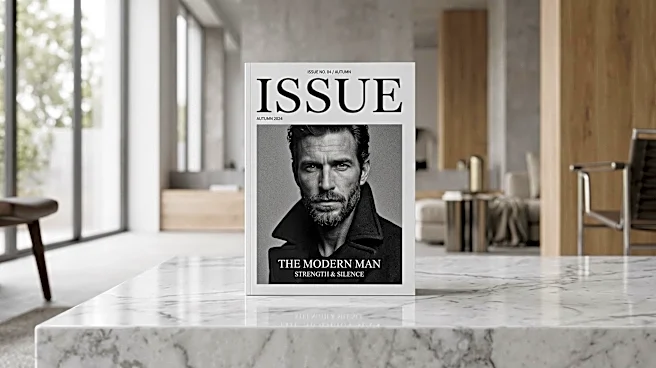
Adam Baidawi, in his early tenure as GQ's global editorial director, has generated significant attention and conversation through his selection of cover subjects. His recent choice of Tom Cruise for a cover story, regardless of public opinion on the aesthetic
or relevance, successfully created a 'monocultural moment.' Baidawi is actively shaping the narrative around modern masculinity for one of the most recognized men's titles. He emphasizes candor as essential for cutting through contemporary noise, a philosophy he applies to his editorial decisions. This approach has led to both praise and controversy, highlighting his intent to provoke discussion and redefine the magazine's direction under his leadership. The focus is on creating impactful content that resonates widely, even if it challenges conventional expectations.
Why It's Important?
Adam Baidawi's editorial strategy at GQ is significant for the U.S. media landscape, particularly in men's fashion and lifestyle publishing. By making 'controversial, if not questionable, choices in cover subjects,' he is actively testing the boundaries of what constitutes a 'monocultural moment' in an increasingly fragmented media environment. This approach could redefine how traditional magazines maintain relevance and generate engagement. For the publishing industry, it demonstrates a potential shift towards more provocative content to capture attention, moving away from safer, universally accepted choices. The success or failure of this strategy could influence other publications to either adopt similar bold editorial stances or reinforce more conservative approaches. It also impacts how 'modern masculinity' is portrayed and discussed in mainstream media, potentially influencing cultural perceptions and trends among male audiences.
What's Next?
The ongoing impact of Adam Baidawi's editorial direction at GQ will likely be observed through future cover choices and the subsequent public and industry reactions. His stated belief in candor suggests a continued willingness to challenge norms, which could lead to further controversial selections. The magazine's circulation figures, online engagement metrics, and advertising revenue will be key indicators of whether this strategy is sustainable and successful in the long term. Other media outlets will be watching to see if this bold approach translates into increased readership and cultural influence, potentially inspiring similar shifts in editorial leadership across the U.S. publishing sector. The discourse around 'modern masculinity' as defined by GQ under Baidawi's leadership will also continue to evolve, reflecting broader societal changes and debates.
Beyond the Headlines
Beyond the immediate impact on GQ's readership and the publishing industry, Baidawi's approach raises deeper questions about the role of traditional media in shaping cultural narratives. In an era of declining print readership and fragmented digital consumption, the deliberate creation of 'monocultural moments' through potentially controversial figures highlights a strategy to reclaim influence and spark widespread conversation. This tactic touches upon the ethical considerations of media responsibility versus the pursuit of engagement. It also reflects a broader cultural shift where the definition of masculinity is under constant re-evaluation, and media platforms like GQ play a significant role in both reflecting and influencing these evolving perceptions. The long-term implications could include a redefinition of editorial leadership, where the ability to generate buzz, even through controversy, becomes a primary measure of success.