





What's Happening?
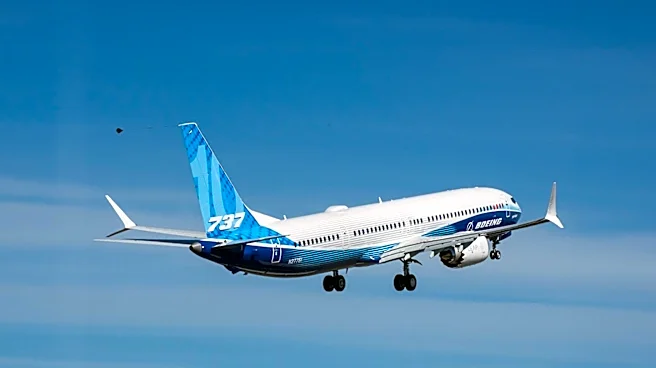
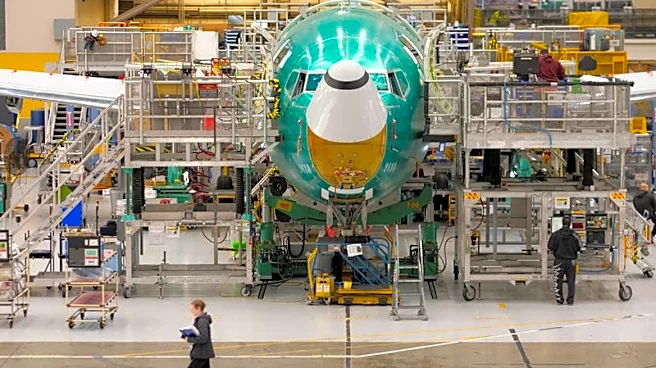
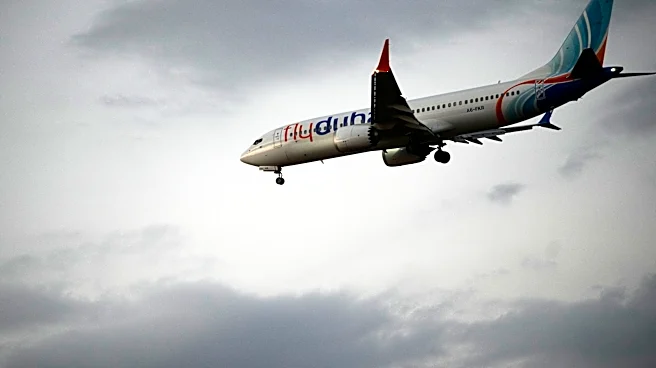
The Federal Aviation Administration (FAA) has determined that a recently identified software glitch in Boeing's 737 Max 10 aircraft is not a flight-safety issue. This decision removes a significant hurdle for the certification of the 737 Max 10, the largest
model in Boeing's 737 Max family. The software issue, which Boeing flagged last month, could arise after a missed approach when pilots alter a preprogrammed flight path, requiring additional steps to use automated tools on subsequent approaches. However, a panel of FAA safety experts concluded that pilots retain full control of the aircraft and the indications to the flight crew are clear and unambiguous. The FAA will issue a special bulletin to airlines detailing how to recognize and respond to the issue. This determination follows a period of scrutiny for Boeing's 737 Max series, which has faced multiple delays and safety concerns.
Why It's Important?
The FAA's ruling is crucial for Boeing, as it clears a path for the certification of the 737 Max 10, a model vital to the company's commercial aircraft portfolio. Delays in certification have impacted Boeing's ability to deliver new aircraft and fulfill orders, affecting its financial performance and market position. The 737 Max 10 is a key competitor in the narrowbody aircraft market, and its timely certification is essential for Boeing to maintain its competitive edge against rivals. For airlines, particularly those like Alaska Airlines and Ryanair that have placed significant orders for the Max 10, this news offers relief from potential further delays in fleet expansion and modernization. The decision also signals a degree of confidence from the FAA in Boeing's ability to address software issues, which could help restore some public and industry trust in the Max series following previous incidents.
What's Next?
With the FAA's determination, Boeing can now proceed with the final stages of certification for the 737 Max 10. The FAA will issue a special bulletin to airlines, providing guidance on how to manage the software issue. While the immediate hurdle has been cleared, Boeing will continue to face ongoing scrutiny regarding its quality control and manufacturing processes. The company is also working on bringing the 737 Max 7 to market, which received FAA approval in August. The focus will now shift to the timeline for the official certification and subsequent deliveries of the 737 Max 10 to airlines. Boeing's ability to meet delivery schedules and avoid further issues will be critical for its reputation and financial outlook in the coming months and years.
Beyond the Headlines
This development highlights the complex interplay between regulatory oversight, technological advancements, and commercial pressures in the aerospace industry. The FAA's thorough review process, even for seemingly minor software glitches, underscores the stringent safety standards applied to commercial aircraft. While the immediate issue has been resolved, the broader implications for Boeing involve rebuilding long-term trust with both regulators and the flying public. The incident also points to the increasing complexity of modern aircraft software and the challenges in ensuring its flawless operation. The ongoing need for robust software development, rigorous testing, and transparent communication with regulatory bodies will remain paramount for aircraft manufacturers as they introduce new models and technologies.