



What's Happening?
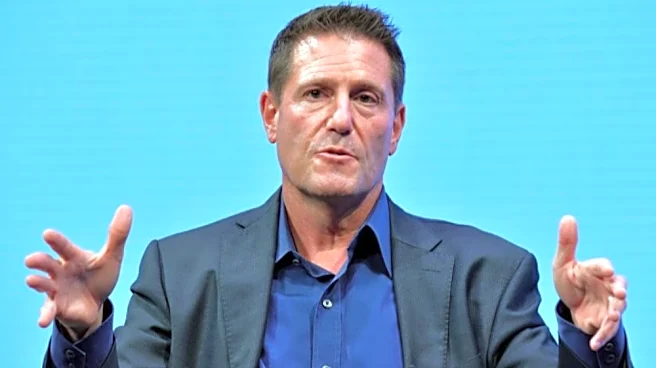
Kevin Mayer, co-founder of Candle Media and former Disney executive, anticipates that the trend of media consolidation will persist for several more years. Speaking at Doha Industry Days, Mayer, who was instrumental in Disney's acquisition of 21st Century
Fox and other major deals like Pixar and Marvel, stated that the primary driver for this ongoing merger activity is the stagnation of revenue growth within the media industry. He reflected on recent significant mergers, including Skydance's, and indicated that with traditional revenue streams no longer expanding, companies are compelled to consolidate to seek efficiency and new growth avenues. Mayer's perspective is informed by his extensive experience in major media acquisitions, suggesting a fundamental shift in the industry's economic landscape where organic growth is increasingly challenging to achieve. This outlook suggests a future where fewer, larger entities may dominate the media production and distribution landscape.
Why It's Important?
The prediction of prolonged media consolidation by a figure like Kevin Mayer carries significant weight for the U.S. media industry. This trend could lead to a more concentrated market, potentially reducing competition and diversity in content creation. For consumers, this might mean fewer independent voices and a more homogenized media landscape, as larger entities prioritize content that appeals to broader audiences to maximize returns. For smaller production companies and independent creators, the environment could become more challenging, as they might struggle to compete with the resources and distribution networks of consolidated giants. Furthermore, this consolidation could impact employment within the industry, as mergers often lead to redundancies and restructuring. Investors in media companies will also be closely watching these trends, as consolidation can lead to increased market power and potential for higher profitability for the surviving entities, but also risks associated with integration and market dominance.
What's Next?
In the immediate future, the media industry is likely to see continued discussions and negotiations around potential mergers and acquisitions, particularly among companies facing revenue pressures. Stakeholders, including investors, content creators, and regulatory bodies, will be closely monitoring these developments. Regulatory scrutiny over large-scale mergers could intensify, especially if concerns about market dominance and anti-competitive practices arise. Companies like Candle Media, which has made significant acquisitions such as Reese Witherspoon's Hello Sunshine, will likely continue to evaluate their portfolios and strategies in this evolving landscape. The focus will remain on how these consolidated entities can leverage their combined assets to generate new revenue streams and adapt to changing consumer behaviors, particularly in the streaming sector. Further consolidation could also prompt smaller players to seek niche markets or innovative business models to survive.
Beyond the Headlines
Beyond the immediate financial and structural implications, sustained media consolidation raises deeper questions about cultural influence and democratic discourse. As fewer companies control more media outlets, there's a potential for a narrowing of perspectives and a reduction in the range of stories being told. This could have long-term effects on public opinion, cultural narratives, and the representation of diverse voices. The ethical implications of such concentration of power in media are significant, as it could influence political discourse and societal values. Additionally, the drive for efficiency through consolidation might inadvertently stifle creative risk-taking, as larger entities may favor proven formulas over experimental content. The long-term health of a vibrant and diverse media ecosystem could be at stake, prompting a need for ongoing dialogue about the balance between economic efficiency and public interest in media ownership.