



What's Happening?
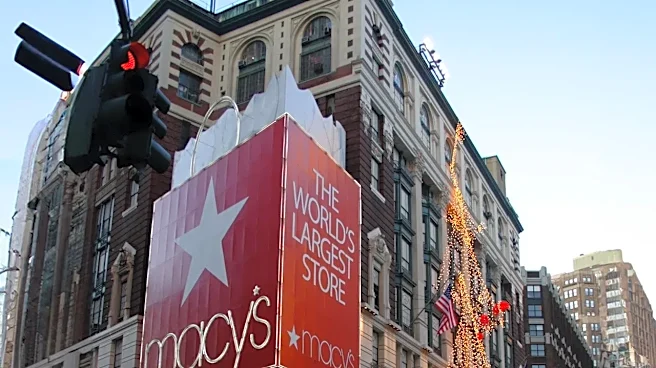
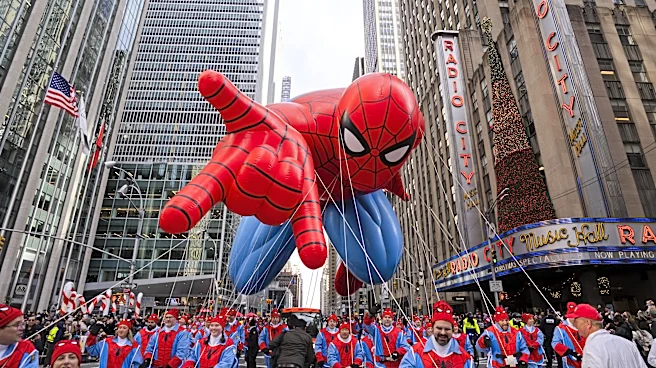
The Macy's Thanksgiving Day Parade is celebrating its 100th anniversary, marking a century of transforming Manhattan's streets into a holiday spectacle. Originating in 1924 as the Macy's Christmas Parade, its initial purpose was to kick off the holiday shopping
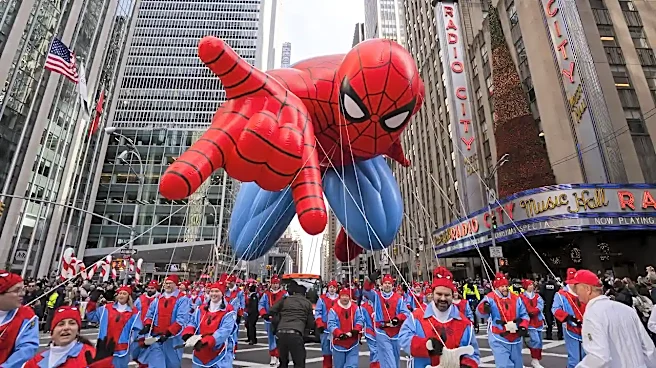
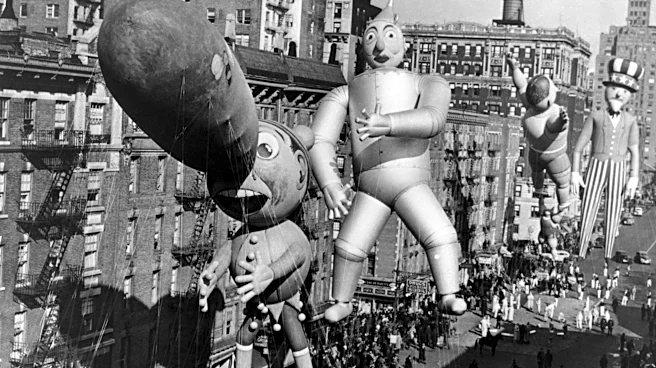
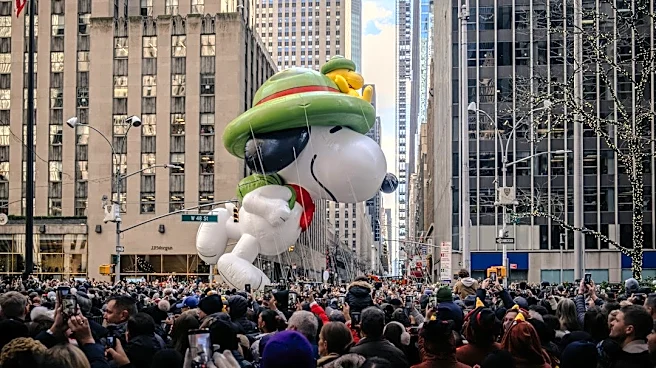
season and attract customers to the retailer's expanded Herald Square location. Over the decades, the parade has evolved significantly, featuring live animals from the Central Park Zoo in its early years, which were later replaced by giant character balloons. The first character balloon, Felix the Cat, debuted in 1927, followed by Walt Disney's Mickey Mouse in 1934. The parade also saw a hiatus during World War II and made its national television broadcast debut on CBS in 1947, significantly broadening its audience. Notable moments include the introduction of the Radio City Rockettes in 1958 and the enduring popularity of characters like Snoopy and Tom Turkey.
Why It's Important?
The Macy's Thanksgiving Day Parade holds significant cultural and economic importance in the U.S. as a cherished national tradition. Its role in initiating the holiday shopping season underscores its historical connection to retail and consumer spending, influencing economic activity nationwide. The parade's evolution reflects broader societal changes, from its early use of live animals to the development of iconic character balloons, showcasing advancements in entertainment and marketing. Its national television broadcast transformed it into a shared cultural experience, uniting families across the country on Thanksgiving Day. The parade's ability to adapt and persist through events like World War II and even a global pandemic highlights its resilience and enduring appeal as a symbol of American festivity and community spirit.
What's Next?
As the Macy's Thanksgiving Day Parade continues its tradition, future iterations will likely build upon its rich history while incorporating new innovations. The ongoing challenge will be to maintain its appeal to diverse audiences, balancing classic elements with contemporary trends in entertainment and technology. Organizers will continue to focus on safety measures, especially given past incidents like the 1997 Cat in the Hat balloon mishap, which led to significant safety overhauls. The parade's role as a national spectacle means it will remain a key event for advertisers and broadcasters, potentially exploring new interactive elements or digital integrations to engage viewers. Its continued success will depend on its ability to evolve while preserving the core traditions that have made it a beloved American institution for a century.
Beyond the Headlines
Beyond its immediate spectacle, the Macy's Thanksgiving Day Parade offers a lens into American cultural identity and commercialism. Its origins as a marketing tool for Macy's highlight the deep intertwining of commerce and celebration in U.S. holidays. The parade's ability to adapt to changing times, from wartime pauses to pandemic-era modifications, reflects a broader American resilience and commitment to tradition. The shift from live animals to giant balloons also symbolizes a move towards more elaborate, engineered forms of entertainment. Furthermore, the parade serves as a platform for national unity and shared experience, particularly in moments of national significance, such as the post-9/11 tribute. It embodies a collective memory and a continuous narrative of American festivity, innovation, and community.