






What's Happening?
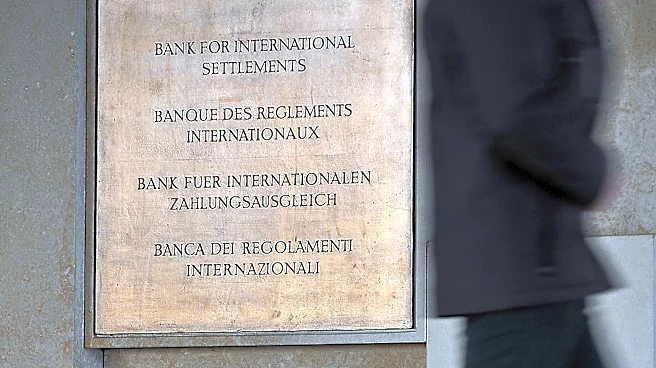
The Bank for International Settlements (BIS) Innovation Hub has identified governance and the establishment of common rules as the primary challenges for implementing efficient cross-border payment systems, rather than technological limitations. According
to Miguel Díaz, deputy head of the BIS Innovation Hub, various technological approaches, including tokenized solutions like Project Agorá, synchronization between existing systems, and hub-and-spoke models such as Project Nexus, are all functionally effective. However, the lack of a unified regulatory framework and common standards is impeding their widespread adoption. Ivan Odonnat, general director for financial stability and operations at Banque de France, noted strong central bank commitment to Project Agorá, with a potential live date by late 2027 or 2028, contingent on agreement on governance. The project involves approximately 50 commercial banks and most major central banks, demonstrating significant industry interest. Settlements that typically take days have been shown to complete in seconds during testing. Central bankers emphasized the need to adapt existing anti-money laundering and messaging standards for blockchain-based systems rather than creating entirely new ones. The role of central bank money as the most secure settlement asset was also underscored.
Why It's Important?
The push for more efficient cross-border payment systems is crucial for global commerce and financial stability. Current systems often involve delays, high costs, and operational complexities, which can hinder international trade and remittances. By streamlining these processes, businesses can operate more efficiently, and individuals can send money across borders more quickly and affordably. The BIS's focus on governance highlights a critical bottleneck: without harmonized rules and regulatory clarity, even the most advanced technologies cannot achieve their full potential. This impacts U.S. businesses engaged in international trade, financial institutions handling cross-border transactions, and consumers sending or receiving international payments. A more integrated and efficient global payment network could reduce operational risks, enhance transparency, and potentially lower the cost of doing business internationally, fostering economic growth. Conversely, continued fragmentation and lack of common standards could leave U.S. entities at a disadvantage in an increasingly interconnected global economy.
What's Next?
The immediate next steps involve central banks and financial institutions working towards a consensus on governance frameworks and common rules for cross-border payment systems. Project Agorá aims to go live by late 2027 or 2028, depending on how quickly participants can agree on these crucial governance aspects. France is preparing to launch a tokenized version of its negotiable European commercial paper market in December, which will utilize central bank money for settlement, serving as a real-world test case. The Bank of England plans to release a tokenization roadmap and launch a synchronization service by 2028, allowing its real-time gross settlement system to connect with various external ledgers. These developments suggest a phased approach, with individual countries and regions implementing tokenized solutions and then working towards broader interoperability. The financial industry is being urged to engage early in these initiatives, adapting existing standards rather than waiting for a fully unified global system. This collaborative effort will be essential for overcoming the governance hurdles identified by the BIS.
Beyond the Headlines
The emphasis on governance over technology in cross-border payments points to a broader challenge in the digital transformation of finance: the need for regulatory innovation to keep pace with technological advancements. While distributed ledger technology (DLT) offers unprecedented speed and efficiency, its full potential is constrained by the existing patchwork of national regulations and legal frameworks. This situation raises fundamental questions about national sovereignty in a globally interconnected financial system. The push for common rules could lead to a gradual harmonization of financial regulations across borders, potentially influencing how anti-money laundering (AML) and counter-terrorist financing (CTF) measures are implemented globally. Furthermore, the continued stress on central bank money as the safest settlement asset reinforces the role of central banks in maintaining financial stability amidst the rise of private digital currencies and tokenized assets. This could shape the future landscape of digital currencies, ensuring that central authorities retain control over monetary policy and systemic risk management.