






What's Happening?
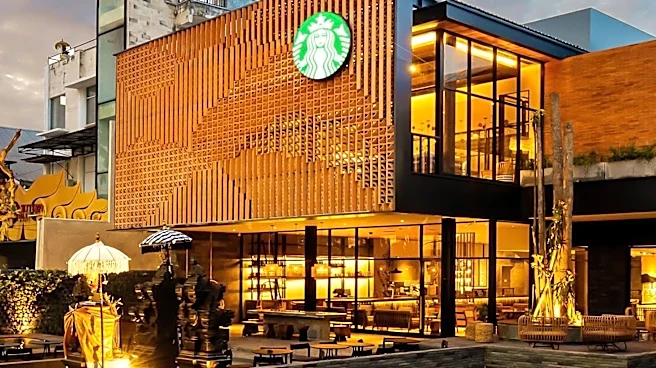
During his tenure as CEO of Starbucks, Kevin Johnson faced the challenge of balancing the company's core 'Third Place' experience with its rapid expansion into more convenient, 'pick-and-go' locations like gas stations. This expansion risked diluting
Starbucks' established identity as a unique social space between home and work. Johnson recognized that Starbucks had reached a critical mass and needed to offer convenience while simultaneously preserving the distinctive 'Third Place' atmosphere. His strategy focused on restraint and returning to the company's root strength, aiming to grow the 'Starbucks way' by ensuring that the customer experience remained central, even as the company sought broader accessibility.
Why It's Important?
Kevin Johnson's strategic approach at Starbucks highlights a significant challenge for U.S. businesses, particularly in the retail and service sectors: how to scale operations and increase accessibility without compromising core brand identity and customer experience. The 'Third Place' concept was fundamental to Starbucks' success, creating a loyal customer base. Diluting this unique selling proposition could have led to a loss of brand differentiation and customer loyalty in a competitive market. Johnson's focus on balancing convenience with experience demonstrates the importance of strategic clarity and brand stewardship for long-term success. This case study offers valuable lessons for other U.S. companies grappling with growth strategies and maintaining brand integrity in an evolving consumer landscape.
What's Next?
The strategic dilemma faced by Kevin Johnson at Starbucks continues to be relevant for many U.S. companies. As consumer preferences shift towards both convenience and authentic experiences, businesses will likely continue to explore hybrid models that integrate digital accessibility with unique in-person offerings. This could lead to further innovation in store formats, service models, and technological integrations designed to enhance customer journeys. The ongoing challenge for Starbucks and similar brands will be to continuously adapt their strategies to meet these evolving demands, ensuring that expansion efforts complement rather than detract from their core brand values. Future leadership will need to maintain a keen awareness of how growth impacts customer perception and loyalty.
Beyond the Headlines
The 'Third Place' concept championed by Starbucks, and its subsequent challenge during Kevin Johnson's leadership, speaks to a deeper cultural phenomenon in the U.S.: the search for community and belonging outside of traditional home and work environments. As society becomes increasingly digital, physical spaces that foster connection and a sense of identity become even more valuable. The struggle to maintain this 'Third Place' while pursuing commercial growth raises questions about the commodification of social spaces and the impact of corporate expansion on community building. It underscores the ethical responsibility of large corporations to consider the broader social implications of their business models, beyond just profit margins, and how they contribute to or detract from the social fabric of communities.