




What's Happening?
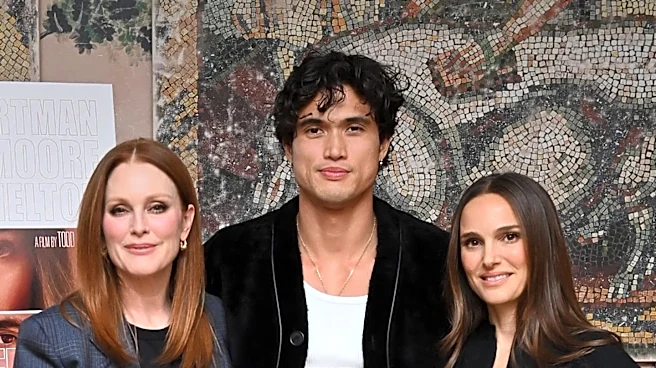
Rachel Cusk's new novel, 'Life of M,' has generated significant public discussion due to speculation that its protagonist, a Hollywood A-lister named M, is inspired by actress Natalie Portman. The character's 'resume' in the book, including details like
being a breakout child artist, starring in famous films such as 'Black Swan,' appearing in Dior commercials, and owning a Paris mansion, closely mirrors Portman's public profile. This resemblance has led to a 'high-profile public spat,' with reports from Portman's 'friends' indicating she is hurt by the portrayal. The controversy has been described by some as a 'literary assassination,' highlighting the blurred lines between autofiction and real-life celebrity. Cusk, known for her experimental approach to fiction and her 'Outline' trilogy, has previously explored themes of selfhood, gender, and social identity, often drawing from personal experiences.
Why It's Important?
This incident underscores the complex relationship between autofiction, celebrity culture, and public perception. For authors like Rachel Cusk, who challenge conventional narrative structures and delve into the nature of identity, the use of real-life inspirations can lead to both critical acclaim and significant controversy. The situation raises questions about artistic license, privacy, and the ethical boundaries of fictional portrayals when they closely resemble living individuals. For celebrities like Natalie Portman, such literary interpretations can impact their public image and personal feelings, even if the author intends to explore broader themes of fame and identity. The media storm surrounding 'Life of M' highlights the intense scrutiny public figures face and the potential for art to provoke strong reactions, blurring the lines between creative expression and personal offense. It also brings to the forefront discussions about the responsibilities of authors when crafting characters that appear to be thinly veiled versions of real people.
What's Next?
The immediate aftermath of the controversy surrounding 'Life of M' will likely involve continued media attention and public debate regarding the novel's inspiration and its implications for Natalie Portman. While it is impossible to verify the exact nature of the interactions between Cusk and Portman, the public discussion will continue to shape perceptions of both the author and the actress. The incident may influence future literary works, potentially leading authors to be more cautious or more provocative in their use of real-life figures in autofiction. For readers, the controversy adds another layer of interpretation to the novel, prompting them to consider the themes of celebrity, authenticity, and the nature of storytelling. The book's sales and critical reception may also be affected by the ongoing public discourse, as readers and critics engage with the work through the lens of this high-profile spat.
Beyond the Headlines
The 'Life of M' controversy delves into deeper ethical and cultural implications concerning the portrayal of public figures in art. It highlights the tension between an artist's freedom of expression and an individual's right to privacy and control over their narrative. The concept of autofiction, where elements of an author's life are woven into fictional narratives, is further complicated when the 'real' subjects are recognizable public figures. This incident could contribute to a broader conversation about the responsibilities of authors and publishers in navigating these sensitive areas. It also reflects on the nature of celebrity itself, where public personas are often constructed and deconstructed, both by the individuals themselves and by external observers, including artists. The debate over 'Life of M' serves as a case study in how art can both reflect and influence societal perceptions of fame, identity, and the boundaries of creative interpretation.