
What's Happening?
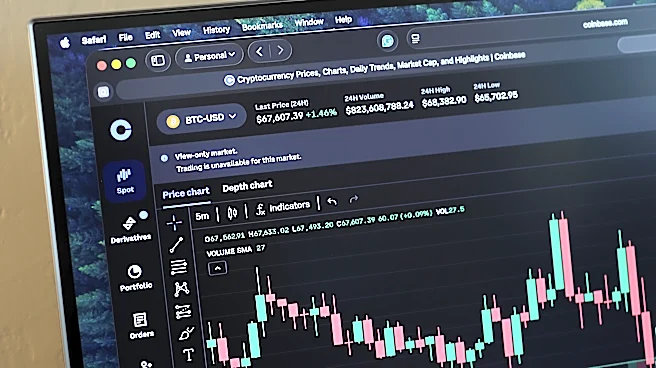
On November 23, 2026, the price of Bitcoin (1 BTC) reached $61,134.34, marking a $399.78 increase from the previous day. This price point, however, represents a significant $25,667 decrease compared to
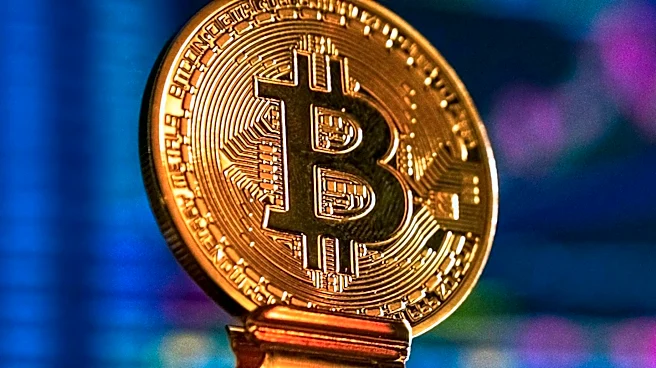
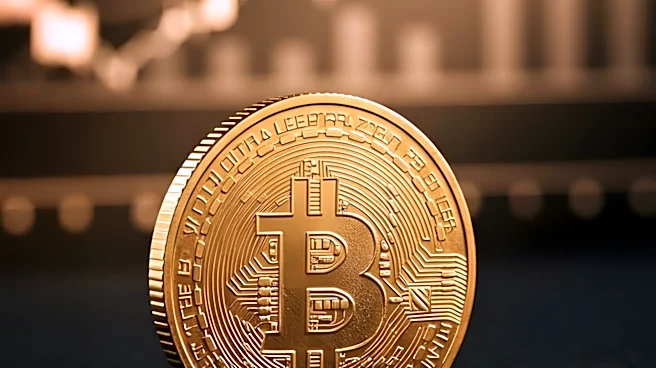
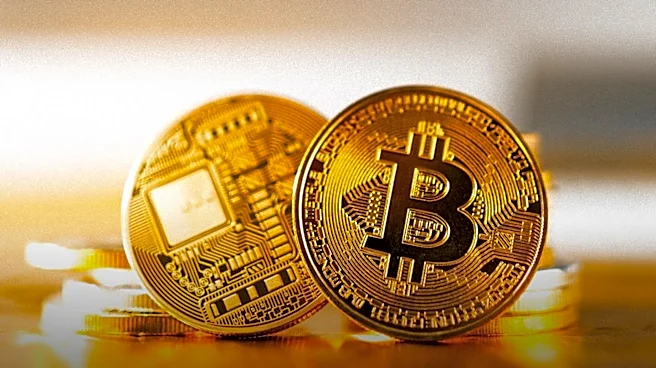
its value one year ago. Bitcoin, the pioneering and most widely held cryptocurrency, operates on a decentralized proof-of-work blockchain with a finite supply of 21 million coins. It was launched in 2009, introducing a form of digital money that functions independently of traditional banks or governments. Often referred to as 'digital gold,' Bitcoin is frequently utilized as a store of value. The cryptocurrency is highly divisible, allowing for purchases of small fractions, with the smallest unit being 1 Satoshi, equivalent to 0.00000001 BTC. Despite its recent daily gain, Bitcoin has experienced considerable price fluctuations, including a drop of approximately 30% from its all-time high in October 2025.
Why It's Important?
Bitcoin's price movements are crucial for investors and the broader financial market due to its status as the largest cryptocurrency by market capitalization, currently around $1.33 trillion. Its decentralized nature offers an alternative to traditional financial systems, attracting those seeking a hedge against inflation of fiat currencies like the U.S. dollar or a means to diversify investment portfolios. The cryptocurrency's substantial growth over the past decade, often outperforming major stock market indices, highlights its appeal. However, its inherent volatility and susceptibility to rapid price swings present significant risks. The ongoing fluctuations impact individual investors, institutional holders, and companies that have integrated Bitcoin into their operations or balance sheets, influencing investment strategies and market sentiment across the digital asset landscape.
What's Next?
The future trajectory of Bitcoin's price will likely continue to be influenced by a combination of investor speculation, broader economic conditions, and regulatory developments. As more companies adopt crypto technology and Bitcoin becomes a more accepted payment method, its value could see further growth. Conversely, new regulations or shifts in investor sentiment could lead to increased volatility. Strategies like dollar-cost averaging are often recommended for long-term investors to mitigate the impact of price fluctuations. The cryptocurrency market will also observe how Bitcoin performs relative to other digital assets like Ethereum, Tether, and XRP, each serving different purposes within the crypto ecosystem. Continued monitoring of global economic indicators and technological advancements in the blockchain space will be key to understanding Bitcoin's short-term and long-term price movements.
Beyond the Headlines
Beyond its daily price movements, Bitcoin represents a significant shift in financial paradigms, challenging traditional notions of currency and value. Its decentralized architecture fosters a global, permissionless financial system, which has profound implications for cross-border transactions and financial inclusion. The concept of 'digital gold' underscores a growing distrust in centralized monetary policies and a desire for assets with a fixed supply. However, the environmental impact of its proof-of-work consensus mechanism remains a subject of ethical debate, prompting discussions around more sustainable blockchain technologies. Furthermore, the regulatory landscape for cryptocurrencies is still evolving, with governments worldwide grappling with how to integrate digital assets into existing legal and financial frameworks, which could shape Bitcoin's role in the global economy for decades to come.