


What's Happening?
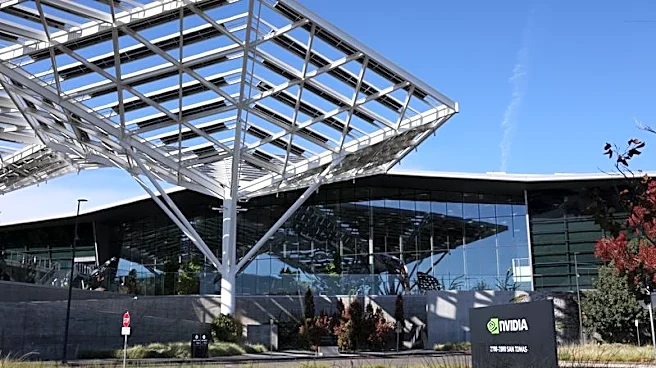
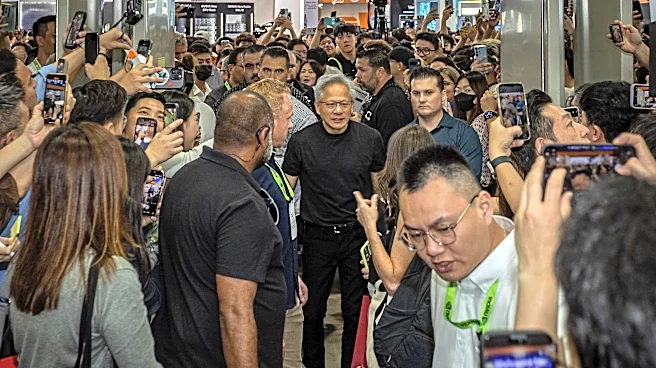
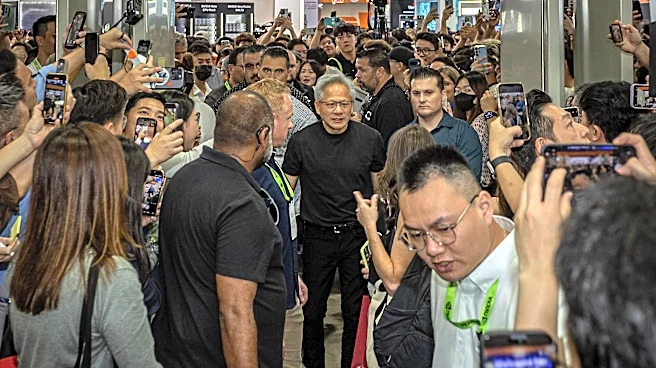
Jensen Huang, co-founder and CEO of NVIDIA, has resigned, with CFO Colette Kress serving as interim CEO while the company searches for a permanent successor. Huang was a prominent advocate for the robotics industry, frequently showcasing humanoids, introducing
development tools, and championing open models and research in his keynotes. Under his leadership, NVIDIA invested significantly in robotics, including developing the Isaac robotics platform, Omniverse, Isaac Sim for simulation, Isaac Lab for robot learning, GR00T and Cosmos foundation models, Isaac ROS software, and Jetson embedded computing. NVIDIA also became a strategic investor in numerous robotics companies, such as Figure AI, NEURA Robotics, Skild AI, Wayve, Waabi, and Serve Robotics. His departure has raised questions about the future direction of NVIDIA's robotics initiatives and the broader industry, which benefited from his vision and financial backing.
Why It's Important?
Jensen Huang's departure from NVIDIA marks a significant moment for the robotics industry, which he helped elevate to mainstream recognition. His advocacy and NVIDIA's substantial investments provided crucial support and credibility for numerous startups and research efforts. The concern among industry leaders, such as Yaro Tenzer of RightHand Robotics and Deepak Jayaraj of Four Growers, is whether NVIDIA's commitment to robotics will continue with the same intensity under new leadership. NVIDIA's physical AI revenue, while growing rapidly, still constitutes a small percentage of its overall revenue, raising fears that future leadership might de-prioritize less profitable, long-term investments in robotics if core data center business growth slows. The loss of Huang's charisma and ability to articulate a compelling vision for robotics could impact investor confidence and the ability of humanoid developers to secure future funding, especially if commercial progress falls short of expectations in the coming year.
What's Next?
The immediate future will involve NVIDIA's search for a permanent CEO and an assessment of its strategic priorities, particularly concerning its robotics division. One early indicator could be the fate of NVIDIA's pending $12.9 billion acquisition of Hugging Face, whose LeRobot initiative is a key resource for robotics developers. The new CEO will also face growing competition in NVIDIA's core data center business and increased political and regulatory scrutiny. While some industry experts, like Robert Little, co-founder of ATI Industrial Automation, express concern about potential funding cuts to robotics if data center growth slows, others, like Tenzer, believe the robotics industry has gained enough momentum to continue its trajectory. The industry will be closely watching which robotics programs NVIDIA continues to fund and whether the new leadership maintains the same level of advocacy and investment in emerging markets.
Beyond the Headlines
Huang's influence extended beyond financial investment; he fostered an ecosystem of developers and promoted open research, lowering barriers to entry for many robotics companies. His departure could lead to a more fragmented landscape, potentially benefiting competing technology providers like AMD and Qualcomm if NVIDIA's focus on robotics wanes. The 'robotics flywheel' that Huang helped set in motion, characterized by continuous innovation and investment, is now expected to carry itself forward, but perhaps with less centralized direction. The challenge for the industry will be to translate the attention and investment garnered under Huang into sustainable businesses, particularly for humanoid companies whose commercial viability is still developing. This transition period could also highlight the importance of individual leadership in driving technological paradigms and the potential vulnerabilities when such influential figures step down, prompting a re-evaluation of how innovation is sustained within large corporations and across entire industries.