






What's Happening?
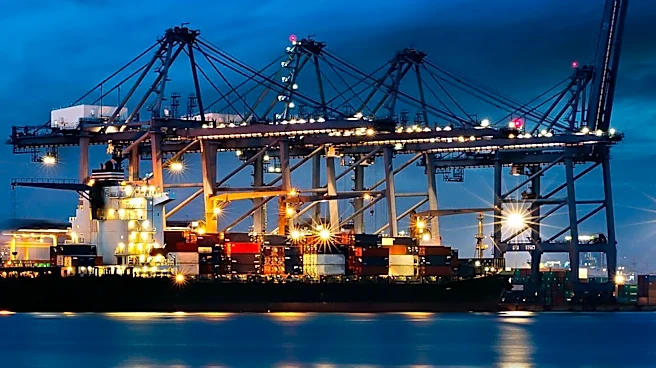
Adani Ports and Special Economic Zone (APSEZ) has significantly expanded the capacity of the Colombo West International Terminal (CWIT), effectively doubling its container handling capabilities. This expansion positions CWIT to attract a greater volume
of transshipment cargo, leveraging Colombo Port's strategic location and established reputation as a major hub in South Asia. The terminal, a flagship investment for APSEZ outside India, has rapidly grown since its inception. This development is expected to further solidify Sri Lanka's role as a critical node in global supply chains, enhancing its competitiveness against other regional ports. The increased capacity is a direct response to the growing global demand for efficient port infrastructure, especially as shipping lines deploy larger vessels requiring higher throughput volumes.
Why It's Important?
This expansion holds considerable economic significance for Sri Lanka, which has been actively working to strengthen its port infrastructure to attract foreign investment and increase trade-related revenues. The doubling of CWIT's capacity is anticipated to lead to several positive outcomes for the nation. These include a greater volume of transshipment cargo passing through Colombo, which will enhance the port's competitiveness against rival regional ports. Furthermore, the development is expected to create expanded employment opportunities and stimulate ancillary economic activities. Crucially, it is projected to increase foreign exchange earnings for Sri Lanka, contributing to the country's overall economic growth and stability. For APSEZ, this move reinforces its commitment to expanding its presence in South Asian maritime trade, signaling confidence in Colombo's long-term growth as a transshipment destination.
What's Next?
Following the operationalization of the doubled capacity at CWIT, attention will now shift to how quickly the terminal can attract additional shipping line calls and increase its annual throughput figures. Port authorities and trade stakeholders in Sri Lanka will be closely monitoring whether this expanded infrastructure translates into tangible economic gains for the national economy in the coming months. The success of this expansion will be measured by its ability to draw more international shipping traffic, further integrate Colombo into global supply chains, and generate the anticipated economic benefits for Sri Lanka. The long-term impact will depend on sustained efforts to maintain efficiency, attract investment, and adapt to evolving global trade dynamics.
Beyond the Headlines
The expansion of CWIT by APSEZ highlights a broader trend of increasing foreign investment in critical infrastructure within South Asian nations. This development underscores the strategic importance of maritime trade routes and the intense competition among regional ports to become dominant transshipment hubs. Beyond the immediate economic benefits, such large-scale infrastructure projects can have profound geopolitical implications, influencing regional power dynamics and trade relationships. The reliance on foreign investment for such crucial assets also raises questions about national sovereignty and economic control. Furthermore, the enhanced capacity could lead to increased environmental scrutiny, necessitating robust sustainability practices to mitigate the impact of higher shipping volumes on marine ecosystems and coastal communities. This move also reflects the ongoing modernization and globalization of port operations, driven by technological advancements and the demand for greater efficiency in global logistics.