

What's Happening?
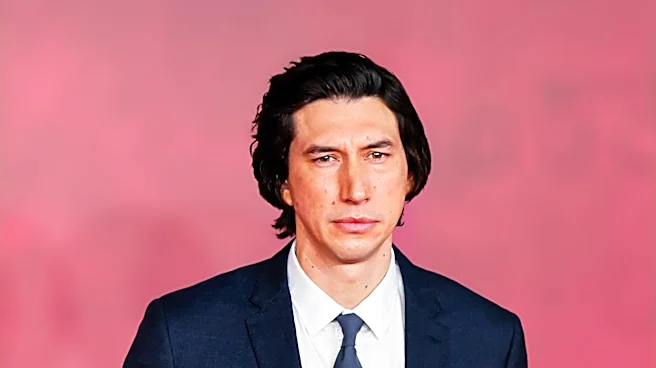
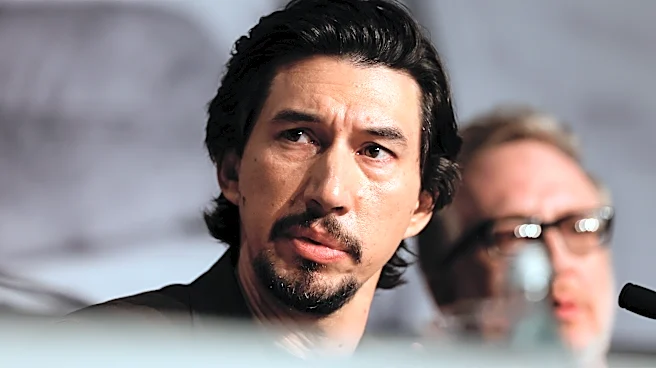
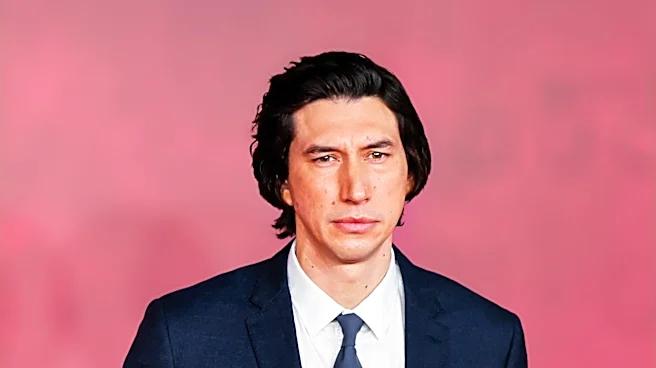
Disney executives Bob Iger and Alan Bergman rejected a proposed 'Star Wars' film titled 'The Hunt for Ben Solo,' which was championed by actor Adam Driver and director Steven Soderbergh. Driver revealed his heartbreak over the scrapped project during
an appearance on 'Talk Easy with Sam Fragoso,' stating that he and Soderbergh had worked on it for a significant period without payment, driven by their passion for the character. Lucasfilm president Kathleen Kennedy had initially encouraged the team, expressing confidence in their approval process, which led to the development of the screenplay. However, the proposal was ultimately turned down by Iger and Bergman, who cited Ben Solo's death in 'The Rise of Skywalker' as the primary reason for their decision. Driver had previously discussed the rejection, characterizing Hollywood as a 'reactionary business' increasingly influenced by financial metrics rather than creative risks. Despite the setback, Driver expressed appreciation for the extensive fan campaign that supported the film, which included billboards in Times Square and a plane flying over Disney's Burbank offices.
Why It's Important?
The rejection of 'The Hunt for Ben Solo' highlights the complex interplay between creative vision, executive decision-making, and established narrative continuity within major film franchises like 'Star Wars.' This decision underscores Disney's commitment to maintaining the integrity of its existing cinematic universe, even when faced with compelling proposals from prominent talent. For fans, it signifies a missed opportunity to explore a beloved character further, potentially leading to discussions about the creative freedom afforded to filmmakers within large studios. The incident also reflects a broader industry trend where financial considerations and established canon often take precedence over new creative directions, potentially limiting the scope for innovative storytelling within established intellectual properties. Adam Driver's public expression of disappointment also sheds light on the emotional investment actors and directors have in their projects, even those that do not come to fruition.
What's Next?
Adam Driver has confirmed that his involvement with the 'Star Wars' franchise has concluded, stating 'No more 'Star Wars'' during an appearance on 'The Rich Eisen Show.' Despite the disappointment of the canceled Ben Solo film, Driver's career continues to move forward with several upcoming projects. He is slated to reunite with Michael Mann for 'Heat 2' and has other films in the pipeline, including Netflix's 'Rabbit, Rabbit' and Ron Howard's 'Alone at Dawn.' Driver is also pursuing ambitious filmmaking through his production company, with plans to collaborate again with Jeff Nichols and an interest in working with Pedro Almodóvar. Additionally, Driver has joined the Marvel Cinematic Universe as Mister Sinister. While the Ben Solo project will not proceed, Driver's focus has shifted to these new ventures, indicating a continued presence in diverse cinematic roles.
Beyond the Headlines
The cancellation of 'The Hunt for Ben Solo' delves into deeper implications regarding the creative control and narrative direction within expansive cinematic universes. It raises questions about the balance between satisfying fan expectations, adhering to established lore, and allowing for artistic exploration. The decision by Disney executives to prioritize the existing narrative conclusion of Ben Solo's character in 'The Rise of Skywalker' over a potential new storyline suggests a cautious approach to franchise management, aiming to prevent any perceived retconning or dilution of previous story arcs. This conservative stance might be seen as a double-edged sword: it maintains narrative consistency but could also stifle innovative storytelling that might challenge or expand the established universe. The strong fan reaction to the proposed film, including organized campaigns, also highlights the significant influence and emotional investment of fan communities in major franchises, underscoring the ongoing tension between corporate creative control and audience desires.