




What's Happening?
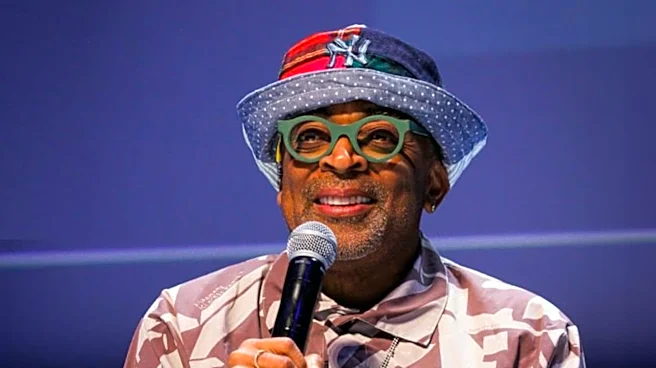
Spike Lee's 2013 remake of the South Korean film 'Oldboy' has drawn criticism for failing to capture the thematic depth of the original, particularly in its handling of a pivotal action sequence. The original 2003 thriller, directed by Park Chan-wook,
features a renowned one-take hallway fight scene where the protagonist, Oh Dae-soo, confronts multiple thugs. Park Chan-wook intended this scene to be a metaphor for the hurdles and ironies encountered in life. However, the American remake's version of this sequence, despite being technically competent, is seen as leaning into action movie excess with changing levels and a faster pace, thereby losing the allegorical significance present in the original. While some studio interference was acknowledged, the overall execution suggests a misunderstanding of the scene's importance and the original film's thematic background.
Why It's Important?
This critique highlights a recurring challenge in Hollywood remakes of foreign films: the difficulty of translating cultural and thematic nuances. When a director like Spike Lee, known for his singular talent, is perceived to miss the core message of a source material, it raises questions about the adaptation process. For U.S. audiences, this can mean a diluted experience, potentially leading to a misinterpretation of the original work's artistic intent. It also impacts the perception of foreign cinema in the U.S., as a poorly received remake might deter viewers from seeking out the original, which often holds greater critical acclaim and cultural significance. The incident underscores the importance of cultural sensitivity and deep understanding when adapting works across different cinematic traditions, affecting both artistic integrity and audience reception.
What's Next?
The discussion surrounding the 'Oldboy' remake contributes to an ongoing conversation within the film industry about the value and approach to remakes, particularly those of critically acclaimed foreign films. Future adaptations may face increased scrutiny regarding their faithfulness to the original's thematic elements and cultural context. This could lead to a greater emphasis on collaborative efforts between original creators and remake directors, or a shift towards more direct distribution of foreign films in the U.S. market, allowing audiences to experience the source material without mediation. Filmmakers considering remakes might be more inclined to articulate their understanding of the original's core themes to preempt similar criticisms.
Beyond the Headlines
The 'Oldboy' remake controversy touches upon broader issues of cultural appropriation and the globalization of media. When a foreign film is remade for a Western audience, there's a risk of stripping away its unique cultural identity and thematic complexities in favor of more universally palatable, often action-oriented, narratives. This can inadvertently reinforce a perception that foreign storytelling needs to be 'translated' or simplified for American consumption. The debate also highlights the subjective nature of artistic interpretation; what one director sees as an homage, another perceives as a misstep. This ongoing dialogue shapes how international cinema is received and reinterpreted, influencing both creative decisions and audience expectations in a globalized entertainment landscape.