



What's Happening?
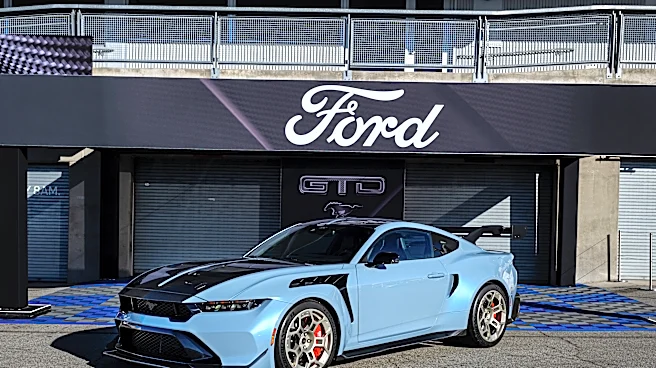
Ford has confirmed its participation in the UK Ministry of Defence’s Light Mobility Vehicle program, aiming to replace the British Army’s aging Land Rover and Pinzgauer fleet. Ford is partnering with General Dynamics Land Systems UK and British engineering
group Ricardo to propose upfitted Ranger and Ranger Super Duty pick-ups for the contract. This move is part of a broader push by Ford into the defense sector, which also includes competing for a separate U.S. Army contract to develop prototypes based on its F-Series Super Duty pickup. The U.S. Army contract seeks to fulfill a 606-vehicle Infantry Squad Vehicle-Heavy requirement, designed to replace the Humvee, with a platform capable of carrying a six-soldier squad and providing up to 60 kW of exportable power.
Why It's Important?
Ford's entry into the military vehicle market signifies a strategic diversification for the company, leveraging its existing manufacturing capabilities and vehicle platforms. This expansion into defense contracting could provide a new revenue stream and utilize underused factory capacity, following a trend seen with other automakers like General Motors and Daimler Truck. For the U.S. defense industry, Ford's involvement in the Army's Infantry Squad Vehicle-Heavy program introduces another major domestic competitor, potentially fostering innovation and cost-effectiveness in military procurement. The requirement for 60 kW of exportable power in the U.S. Army contract highlights a growing need for advanced power solutions in military vehicles, pushing automakers to integrate hybrid and battery-electric drivetrains into their defense offerings.
What's Next?
Ford will continue to develop and pitch its upfitted Ranger and Ranger Super Duty pick-ups for the UK Ministry of Defence contract, working with its partners General Dynamics Land Systems UK and Ricardo. Simultaneously, Ford will advance its prototypes for the U.S. Army's Infantry Squad Vehicle-Heavy requirement. A key challenge for Ford in the U.S. competition will be demonstrating how its Super Duty base, primarily built around internal combustion engines, can meet the military-grade power output requirements, especially given the discontinuation of the F-150 Lightning. New U.S. national security rules, effective early 2027, will also impact defense contractors by limiting sourcing of critical minerals and components from certain countries, adding complexity to supply chain management for both Ford and its competitors.
Beyond the Headlines
Ford's foray into defense contracting reflects a broader trend of automakers seeking new markets and applications for their vehicle technology, particularly as the automotive industry undergoes significant transformation with the shift to electric vehicles. The emphasis on exportable power in military contracts could accelerate the development and integration of advanced hybrid and battery-electric technologies in ruggedized applications, potentially benefiting commercial vehicle development in the long run. However, Ford faces the challenge of catching up to competitors like GM Defense, which has an established defense unit. The new U.S. national security rules regarding critical mineral sourcing could also force a re-evaluation of global supply chains, potentially leading to increased domestic production or diversification of sourcing for defense-related components, impacting the entire automotive and defense manufacturing sectors.