





What's Happening?
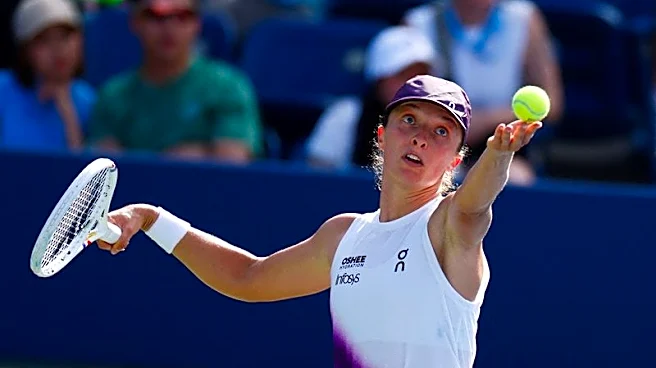
Iga Swiatek, the 21-year-old Polish tennis star, maintains a highly private personal life, rarely discussing her relationships or marital status publicly. Despite her significant achievements on the court, including winning her first WTA title at the 2020
French Open and becoming a dominant player, Swiatek has consistently stated her focus is on her tennis career. In a 2022 interview with ESPN, she explicitly mentioned, 'I'm not married, and I don't think I'll be married soon.' This stance is consistent with her earlier comments in a 2020 interview with Tennis.com, where she expressed discomfort discussing her private life. Swiatek's dedication to her sport began at age four in Warsaw, Poland, leading her to train at the Stefan Batory Academy of Sport and eventually turning professional in 2018. Her commitment to her craft is evident in her rigorous training regimen and her prioritization of competition over romantic endeavors, as she once stated to The New York Times, 'I think I would rather focus on my tennis career than try to find someone and have a relationship.'
Why It's Important?
Swiatek's approach highlights a growing trend among elite athletes, particularly in individual sports, where intense dedication to career often takes precedence over personal relationships. This prioritization can influence younger athletes who look up to her, potentially shaping their own career paths and life choices. Her public statements about maintaining privacy in her personal life also contribute to a broader conversation about the boundaries between public figures' professional and private spheres, especially in the age of pervasive social media. For the sports industry, Swiatek's success, coupled with her disciplined focus, reinforces the idea that singular dedication can lead to peak performance and sustained dominance. This narrative can be leveraged by sports organizations and sponsors to promote values of hard work and commitment, potentially inspiring a new generation of athletes. However, it also subtly underscores the immense pressure and sacrifices required to reach and maintain the pinnacle of professional sports, which can have implications for athletes' overall well-being and long-term personal development.
What's Next?
As Iga Swiatek continues her professional tennis career, it is expected that she will maintain her current stance on personal privacy, focusing primarily on her performance and achievements on the court. Her upcoming matches and tournaments will likely be the main focus of public and media attention, rather than her personal life. Given her past statements, any significant changes in her personal life, such as entering a public relationship or marriage, are unlikely to be announced or discussed by her in the near future. Her continued success will likely further solidify her status as a role model for aspiring athletes, particularly young women, who may adopt a similar career-first mentality. The media will likely continue to respect her boundaries, though speculation about her personal life may persist due to public interest in high-profile figures. Her sponsors and the tennis community will continue to highlight her athletic prowess and dedication, reinforcing her image as a focused and driven champion.
Beyond the Headlines
Iga Swiatek's deliberate choice to keep her personal life private, despite her global fame, reflects a deeper societal discussion about the right to privacy for public figures. In an era where social media and constant media scrutiny often blur the lines between public and private, Swiatek's firm boundaries serve as a powerful statement. This stance challenges the expectation that celebrities, especially athletes, must share every aspect of their lives with the public. It also highlights the potential mental and emotional toll that constant public interest can have on individuals, suggesting that maintaining privacy is a coping mechanism for managing the pressures of elite performance. Furthermore, her dedication to her career over traditional relationship milestones could be seen as a modern feminist statement, emphasizing self-fulfillment and professional achievement as primary life goals. This perspective can resonate with many, particularly young women, who are increasingly prioritizing career and personal growth. Her example contributes to a cultural shift where personal choices, even for public figures, are increasingly respected as individual rights, rather than public commodities.