


What's Happening?
Southwest Airlines is experiencing robust demand and has successfully implemented commercial initiatives that are expected to generate billions in earnings before interest and taxes (EBIT). According to CFO Tom Doxey, these initiatives, including assigned
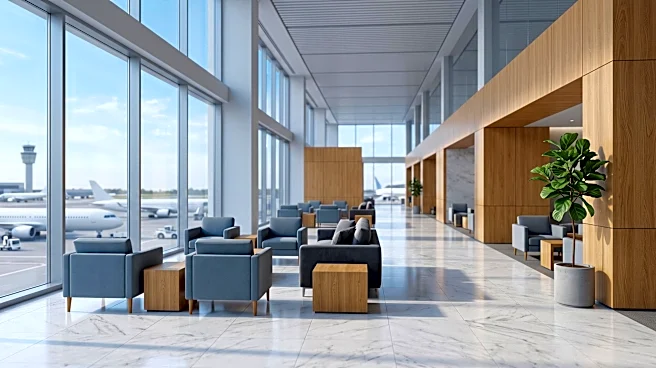
seating, extra-legroom products, and baggage-related changes, have met or exceeded financial expectations. Assigned seating and extra-legroom products are projected to contribute over $1 billion in EBIT in 2026 and approximately $1.5 billion in 2027, while baggage initiatives are expected to add $1 billion in EBIT this year. The airline is also expanding its premium offerings, developing Chase-backed lounges, and considering a premium credit card. Despite a recent surge in fuel prices, Southwest anticipates meeting its third-quarter profit goals, with autumn revenues exceeding expectations. The company has, however, reduced its planned 2026 capacity growth by about half due to higher fuel costs, a measure also being taken by other major U.S. carriers like American Airlines and United Airlines.
Why It's Important?
Southwest Airlines' ability to maintain strong demand and achieve significant financial gains from its commercial initiatives, even in the face of rising fuel costs, highlights a strategic shift in the airline industry. The focus on premium offerings and ancillary products, such as assigned seating and extra-legroom, demonstrates a move towards diversifying revenue streams beyond basic ticket sales. This strategy is crucial for airlines to mitigate the impact of volatile operational costs, particularly fuel. The reduction in planned capacity growth across the industry, including Southwest, indicates a collective effort to protect profitability by prioritizing more lucrative routes and adjusting to economic pressures. This approach could lead to a more stable financial outlook for airlines but might also result in fewer flight options or higher fares for consumers in the long term, as carriers become more selective about their routes and pricing strategies.
What's Next?
Southwest Airlines plans to continue its strategic investments, with approximately 300 aircraft expected to have Starlink installed by the end of the year, and further installations planned for next year. The airline is also evaluating international long-haul service, though no decision has been made. The development of airport lounges in partnership with Chase is underway, with construction having begun at some of the initially announced four locations, and more sites likely to be considered. These lounges are intended to support a future premium credit card offering and attract higher-spending customers. Southwest expects deliveries of some Boeing 737 MAX 7 aircraft around year-end, with these aircraft entering service early next year. The company will continue to monitor fuel prices and may further trim capacity if costs remain elevated, a 'natural response' according to CFO Tom Doxey.
Beyond the Headlines
The success of Southwest's commercial initiatives, particularly in areas like assigned seating and extra-legroom, signifies a notable evolution for an airline historically known for its open-seating policy. This shift reflects a broader industry trend where airlines are increasingly unbundling services and offering more personalized, premium options to cater to diverse customer preferences and generate additional revenue. While this enhances profitability for the airline, it also subtly redefines the passenger experience, potentially leading to a tiered system where comfort and convenience are increasingly tied to additional costs. The strategic focus on corporate travel and the development of airport lounges also suggest an effort to attract and retain high-value business travelers, potentially altering the competitive landscape among U.S. carriers and influencing how corporate travel budgets are allocated.