





What's Happening?
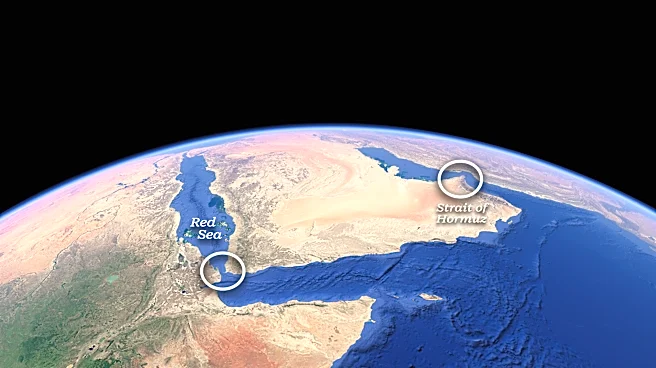
Oil prices have surged past the $100 mark following recent attacks on Saudi oil tankers in the Red Sea and disruptions in Kazakhstan's oil exports. The attacks, claimed by Iran-aligned Houthi rebels, have raised concerns about the security of the Bab
el-Mandeb shipping route, a critical passage for global oil supplies. In response, Brent crude futures have seen significant gains, with a 13.5% weekly increase, while US West Texas Intermediate (WTI) crude has risen by 10.9%. The situation is further complicated by Kazakhstan's temporary production cuts due to suspected Ukrainian drone attacks on its main Black Sea export terminal, affecting about 2% of global daily crude supply.
Why It's Important?
The rise in oil prices has significant implications for global energy markets and economies. Higher oil prices can lead to increased costs for transportation and manufacturing, potentially driving up inflation rates. The geopolitical tensions in the Middle East and disruptions in Kazakhstan highlight the vulnerability of global oil supply chains to regional conflicts and political instability. This situation could lead to increased volatility in energy markets, affecting both producers and consumers worldwide. Additionally, the U.S. government's response, including President Trump's warning of military action, underscores the potential for further escalation in the region.
What's Next?
The ongoing geopolitical tensions suggest that oil prices may remain volatile in the near future. Stakeholders, including governments and energy companies, will likely monitor the situation closely, with potential diplomatic or military responses to further attacks. The international community may also seek to stabilize the region through negotiations or sanctions. Meanwhile, energy companies might explore alternative supply routes or increase production elsewhere to mitigate the impact of these disruptions.